The End of an Era: Olivier Rousteing’s Golden Reign at Balmain
As the news broke that Olivier Rousteing is departing his role as Creative Director of Balmain after fourteen years at the helm, the fashion world paused. His tenure at the storied French house, one of the most visible in recent memory, is not simply marked by collections and press releases; it is shaped by a cultural shift in how luxury, celebrity, diversity, and social media intersect. This is more than a goodbye; it’s a reflection on how one designer rewrote the DNA not just of a brand but of modern Parisian luxury.

When Rousteing assumed the top design role at Balmain in April 2011 at just 25 years old, it was a bold move. He became the first Black person ever appointed creative leader of a heritage French house, a seismic milestone in an industry that has historically been slow to reflect the world it dresses. Within his first full year, he had shifted the trajectory of the brand: in 2012 the house recorded revenues of €30.4 million, and under his subsequent leadership, those numbers would magnify dramatically. Rousteing’s vision was clear from the start: marry the couture pedigree of a Paris house with the energy and immediacy of global pop culture. He once said, “I have always been obsessed with mixing hip hop with fashion.” He refused the idea that high luxury and social media did not belong together, telling his internal doubters, “I told them that, 20 years ago, the internet was not supposed to be luxury, but today your e commerce is the biggest boutique you can have.” In taking that leap, he didn’t just lead a brand; he represented a new paradigm.
Rousteing’s tenure is rich with unforgettable moments, blending runway spectacles, celebrity collaborations, and cultural inflection points. He cultivated what became known as the Balmain Army, a collective of models, influencers, and global icons who embodied the house’s vision of power and glamour. Rihanna, Beyoncé, Kim Kardashian, and Kendall Jenner were among the front faces of this movement, not only wearing his designs but becoming the living expressions of the Balmain aesthetic. When Kim Kardashian appeared at the 2013 Met Gala, the meeting between Rousteing and the reality star turned mogul was described by him as “surprising, electric and love.” That partnership, and others like it, cemented Balmain as a symbol of the intersection between couture and celebrity culture.
In 2015, Rousteing broke boundaries with his collaboration with H&M, bringing Balmain’s opulent silhouettes, heavy embellishments, and structured tailoring to the global high street. Fans lined up overnight, and the collection sold out within hours. He later described it as “bringing so much Balmain around the world and making it affordable,” a moment that proved luxury could be democratic without losing its identity.
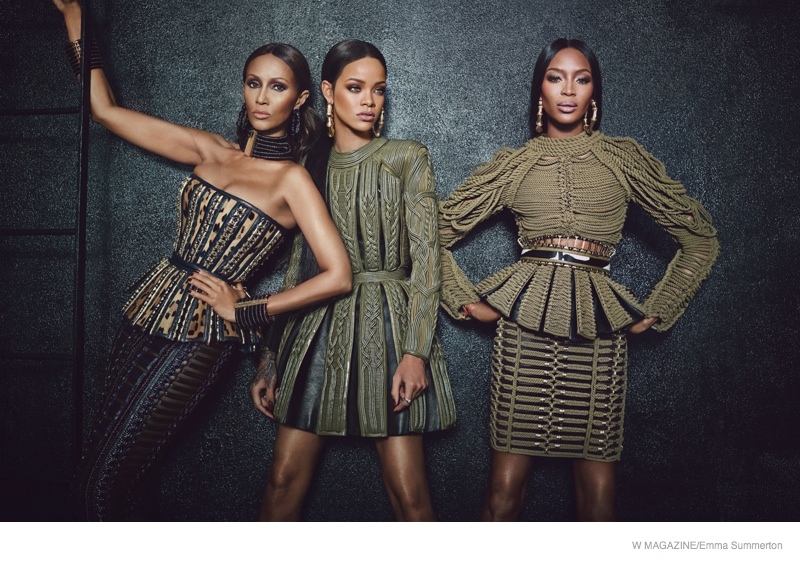
Iman, Rihanna, and Naomi for Balmain. Courtesy of Balmain
His fashion shows evolved into cultural events. In 2019, during Paris’s Fête de la Musique, Rousteing staged a men’s show in the Jardin des Plantes that blurred the lines between concert and catwalk, drawing thousands of guests to what felt like a festival of fashion. That same year, Balmain made its grand return to haute couture after a sixteen-year hiatus, reaffirming Rousteing’s respect for the house’s legacy while propelling it boldly forward.
The red carpet under Rousteing’s reign became a Balmain runway in itself. Beyoncé’s 2018 Coachella performance, dubbed “Beychella,” remains one of the most celebrated fashion moments of the decade, with custom Balmain designs that honored HBCU culture and Black excellence. Kim Kardashian’s pearl-covered gown for her 2014 bachelorette party in Paris captured the decadence of Rousteing’s vision. Rihanna’s countless Balmain appearances fused sensuality and strength, while Taylor Swift’s silver Balmain mini dress and boots at the 2018 American Music Awards embodied the futuristic femininity of his aesthetic. Zendaya stunned at the 2021 Venice Film Festival in a custom Balmain wet-look gown that seemed sculpted from liquid marble, instantly becoming a viral fashion moment.
Other stars, including Doja Cat, Kylie Jenner, Keke Palmer, Jenna Ortega, and Tyla, wore Rousteing’s sculptural and visionary designs on red carpets and at the Met Gala, further reinforcing Balmain’s presence as a pop-cultural powerhouse. His campaigns, too, were moments of nostalgia and reinvention, such as the Spring/Summer 2019 revival of the nineties supermodel era featuring Naomi Campbell, Cindy Crawford, and Claudia Schiffer. Each project carried Rousteing’s signature: cinematic scale, emotional resonance, and unapologetic glamour.
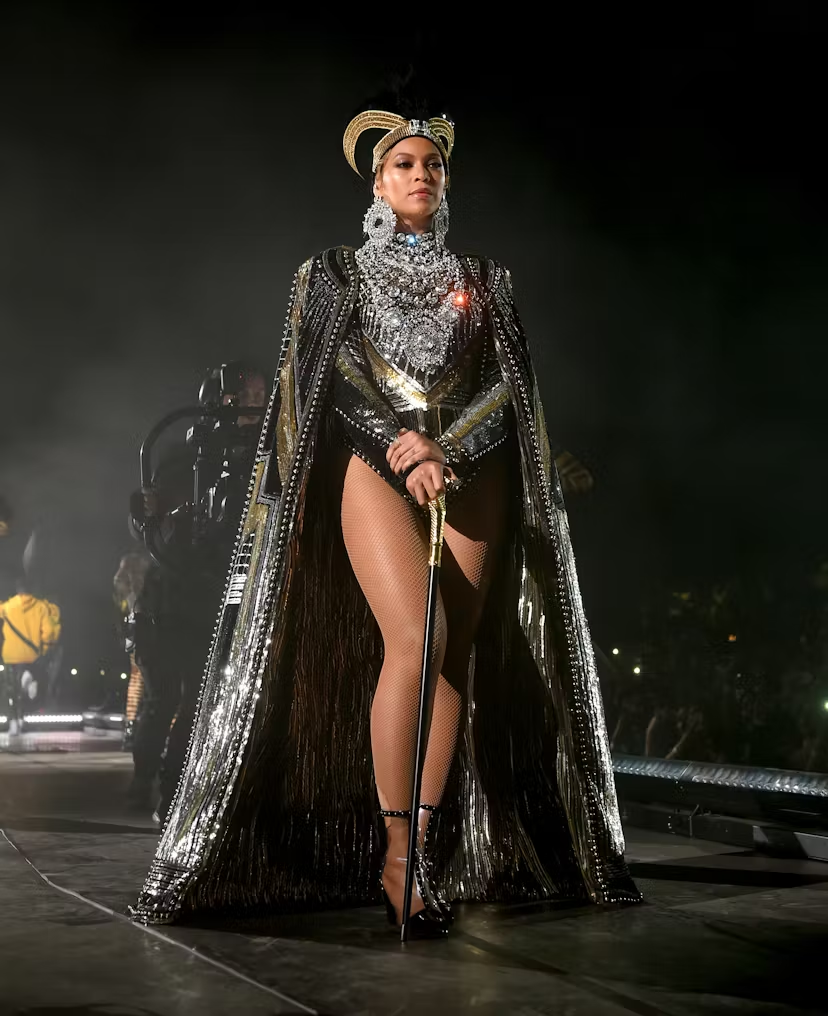
Beyonce in Custom Balmain. Courtesy of Balmain
Rousteing’s partnership with music became another defining chapter. Beyond Beyoncé’s Coachella wardrobe, he designed looks for her Renaissance World Tour and for performers like Rihanna, Jennifer Lopez, and Nicki Minaj. Fashion and music, in his view, were inseparable, both expressing identity, rhythm, and emotion. He once said, “My shows are my concerts. They are my way of communicating love and power.”
In 2020, after suffering severe burns in a fireplace accident, Rousteing returned to the public eye with striking honesty. His 2022 Spring collection became a statement of survival, incorporating bandage motifs and sculptural corsets as metaphors for healing and resilience. “My last show was about the celebration of healing over pain,” he wrote. “I remember when they took out all my bandages it felt like freedom.” This vulnerability deepened the emotional texture of his work, turning fashion into testimony.
His ten-year anniversary show in 2021 at La Seine Musicale embodied everything he had built. Attended by over six thousand guests and featuring performances from Doja Cat and Franz Ferdinand, it felt more like a global celebration than a runway. The audience included students, fans, and long-time collaborators, a democratized vision of couture that symbolized Rousteing’s greatest legacy: breaking down the walls between fashion’s elite and the wider world.
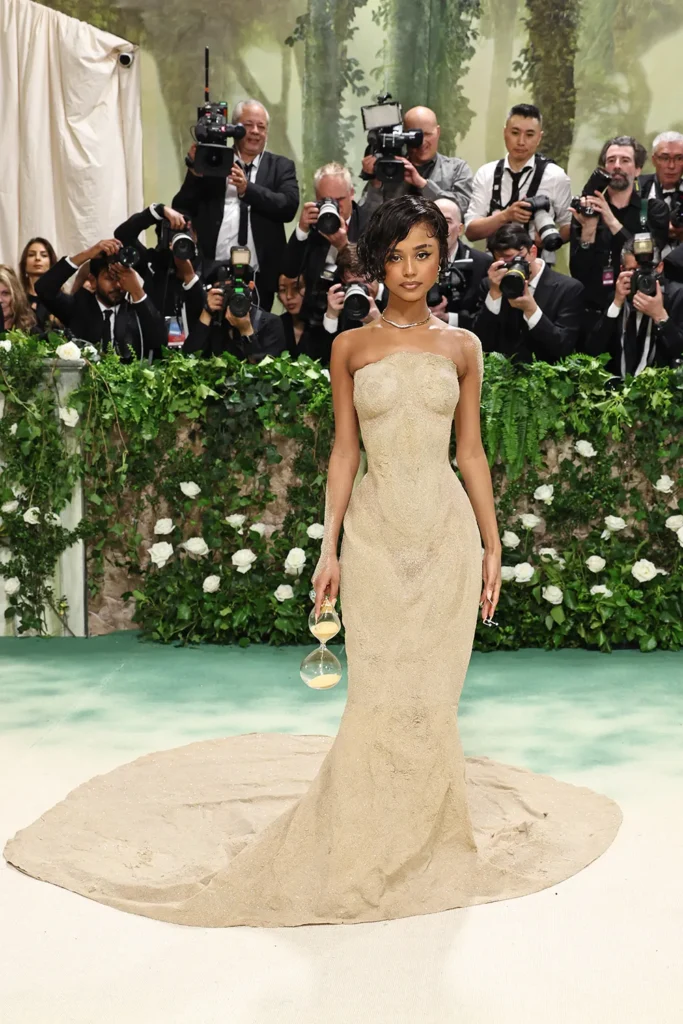
Tyla in Custom Balmain at The Met Gala. Courtesy of Getty Images
Rousteing also transformed Balmain internally. He pushed for diversity in casting and creative teams, prioritizing visibility and inclusivity in a house once known for its traditionalism. His own story, adopted in Bordeaux and later discovering his Somali and Ethiopian roots, shaped his deep understanding of representation. His collections often told stories of identity, belonging, and empowerment, extending the brand beyond aesthetics into emotional connection.
When Rousteing announced his departure, his statement was simple yet heartfelt: “Today marks the end of my Balmain era. I will always hold this treasured time close to my heart.” The announcement left an industry wondering what comes next, both for Balmain and for Rousteing himself. Who could fill the void of a designer who redefined the boundaries of heritage luxury, bringing the brand to digital and global relevance while staying true to Parisian craftsmanship?
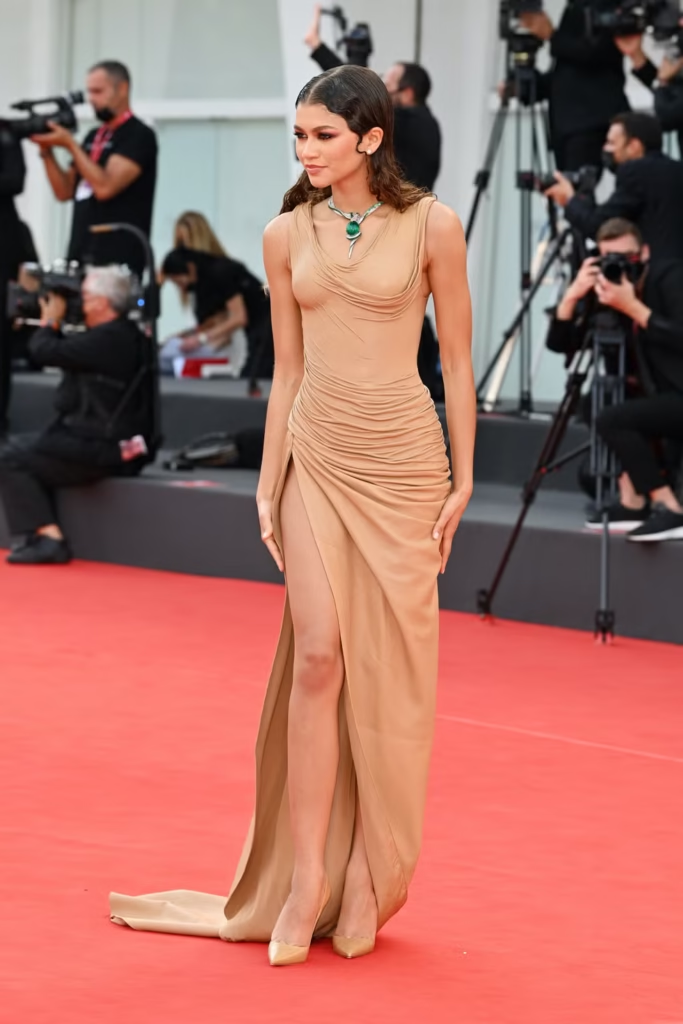
Zendaya in Custom Balmain. Courtesy of Getty Images
Under his leadership, Balmain expanded its product range into beauty, accessories, and fragrance, strengthening its commercial footprint without losing its bold visual signature. The brand’s social media presence, cultivated by Rousteing personally, became one of the strongest in luxury fashion, setting the standard for how digital engagement could complement traditional craftsmanship.
From a debut once seen as audacious to a departure marking the end of a transformative era, Olivier Rousteing’s journey at Balmain stands as one of fashion’s defining narratives. He proved that luxury could be inclusive, that heritage could coexist with modernity, and that the digital age could elevate rather than diminish craftsmanship.
When he stepped in, Balmain was a legacy house searching for a voice. When he steps away, he leaves behind a global empire of influence, identity, and power. His story is more than one of fashion; it is a blueprint for ambition, representation, and creative courage.
In his own words, “I arrived at 24 with my eyes wide open and the determination to persevere, always.” The house will continue. The era remains. And in the history of Balmain, the Olivier Rousteing era will forever be remembered as one of its most powerful and transformative chapters.
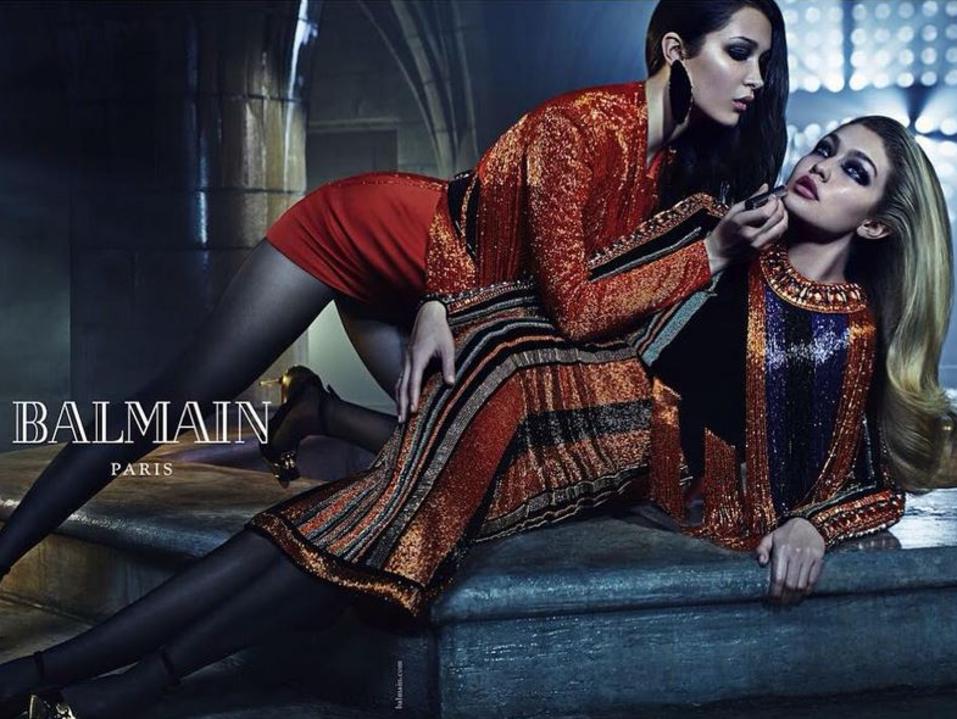
Gigi Hadid and Bella Hadid for Balmain. Courtesy of Balmain