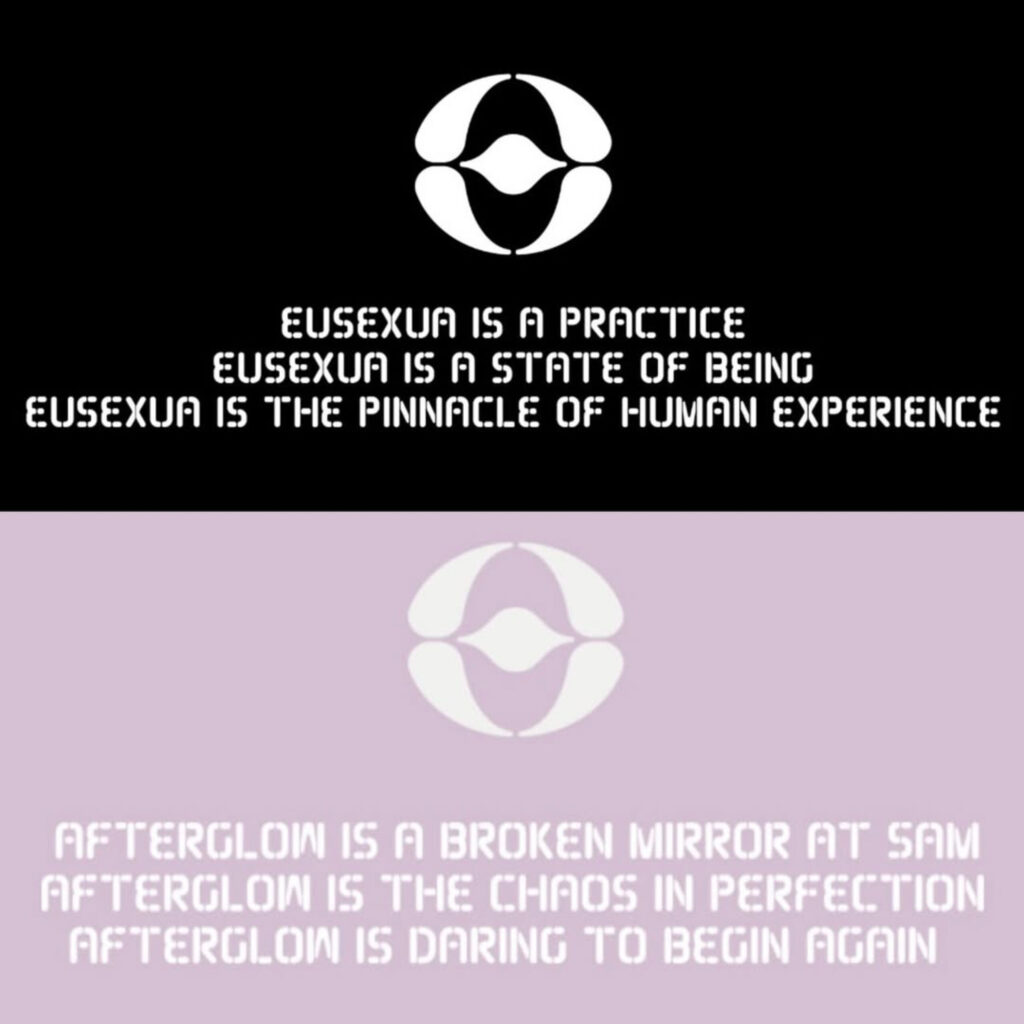
FKA Twigs: EUSEXUA Afterglow
EUSEXUA Afterglow feels like a threshold moment for FKA twigs, a space between records rather than a statement that insists on its own shape. Where EUSEXUA charged forward with erotic electricity, hyper-attuned movement, and the sharp edges of desire, Afterglow lingers in the quiet that naturally follows that intensity. Twigs has described this project as something that arrived without struggle, saying it “came naturally” and that she felt “full and ready to give birth to it.” That language is important, because it signals a shift away from the meticulous, sometimes agonizing sculpting that defined earlier releases like LP1, MAGDALENE, and even the hyperkinetic CAPRISONGS. Afterglow is guided less by architecture and more by instinct. It is twigs learning to trust ease, something she has admitted doesn’t always come naturally.

This matters because twigs’ catalog has often been about deliberate reinvention. LP1 built an otherworldly erotic avant-pop landscape. MAGDALENE expanded into operatic vulnerability, exploring heartbreak with celestial drama. CAPRISONGS broke free from emotional weight by embracing communal joy and experimental pop looseness. EUSEXUA was a further departure, sensual, playful, and direct, almost mischievous in how it claimed pleasure. Afterglow, by contrast, is quieter but not at all smaller. It’s the exhale after an extended inhale. It’s twigs not exploding into new form, but deepening into the one she’s already in.
That difference is clear from the opening track, “Love Crimes,” which enters not with force but with a quiet, pressurized inhale. There’s an immediacy to it, a kind of emotional proximity that’s unadorned even by twigs’ standards. It sets the tone for a record that is less concerned with performance and more with presence. Twigs has said she didn’t feel the need to push or prove, and the track’s restraint reflects that confidence: a trust that smallness can hold as much charge as spectacle.
“Slushy” floats in next, soft and hazy, like wandering into the warm residue of a night that hasn’t fully ended. It’s tender but carries the ache of overstimulation, something bruised beneath the surface. Where EUSEXUA celebrated the body in motion, Afterglow pays attention to how the body feels when the music stops, how skin remembers, how adrenaline drains slowly, how desire leaves an echo.
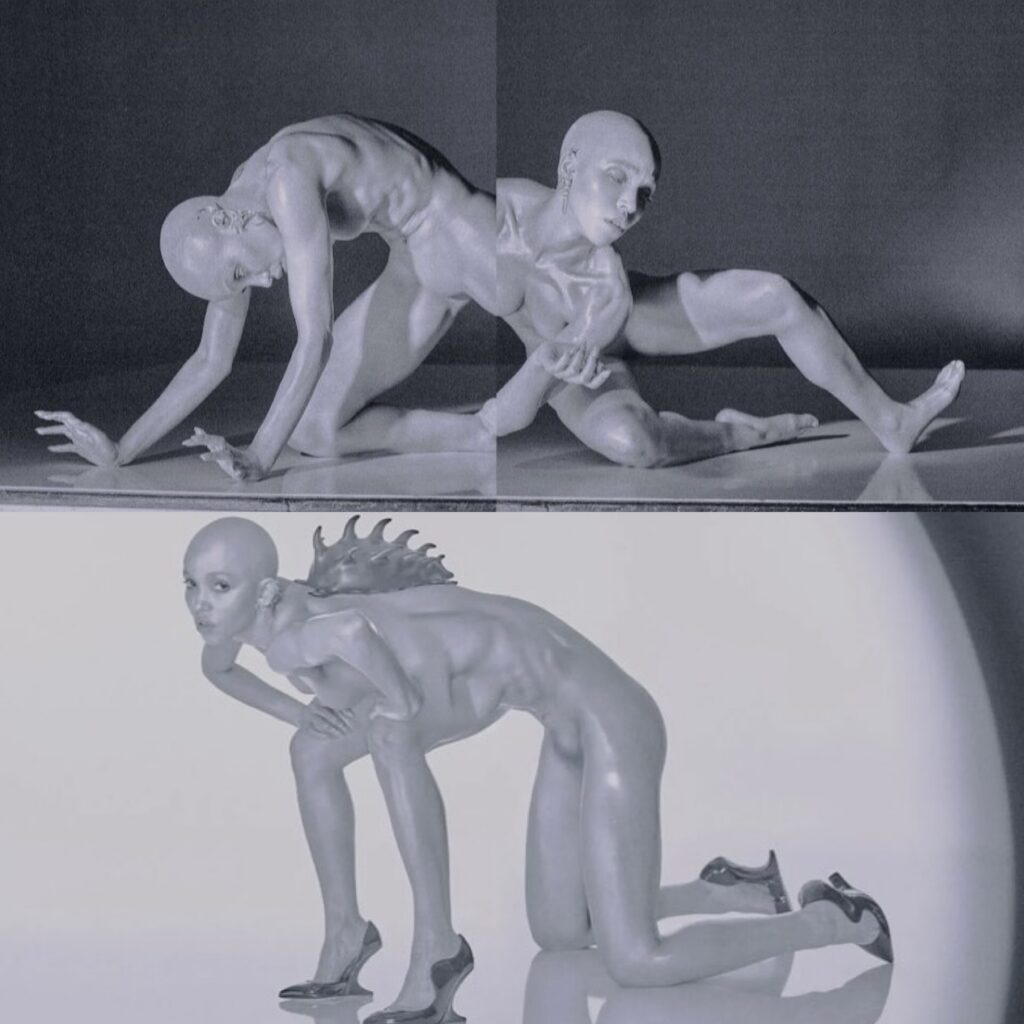
The collaboration with PinkPantheress on “Wild and Alone” is a quiet triumph. It blends twigs’ instinct for emotional texture with PinkPantheress’ signature understated ache. The result is a song that feels immediately classic, shimmering with garage light and the kind of longing that never announces itself but instead accumulates. Twigs’ voice, feathered and intimate, moves with an ease that aligns with her comments about this project arriving naturally.
“HARD” brings back a sense of motion, but it’s grounded. Where earlier twigs tracks might twist and contort rhythm into acrobatics, this one steps with confident intensity. Desire becomes bodily again, but not frantic, more like a remembered choreography, a rhythm that lives in muscle memory rather than demand.
If that track reconnects twigs with kinetic energy, “Cheap Hotel” pulls the listener back into the warmth of memory. It plays like the flicker of an afterparty half-dreamed, details vivid then fading, sensations crisp then blurred. Twigs has always understood how to make music feel tactile, but here that tactility is softer, less sculpted, more like a place you drift into.

“Touch a Girl” and “Predictable Girl” function almost like reflections in a dim mirror. Both explore intention, want, and the complexities of feminine desire, but they approach from opposite angles, one curious, the other anxious, one bold, the other tentative. Twigs often builds albums around emotional binaries, sacred and profane on MAGDALENE, body and machine on LP1, but here the contrast is subtler. The songs acknowledge the multiplicity of wanting without trying to resolve it.
“Sushi” pulses with a rhythmic undercurrent that stays on the skin. It’s sensual, but not in a way that performs sexuality. It’s the kind of sensuality that lingers after touch, something quiet but undeniable. “Piece of Mine” then melts into a warm R&B glow, marking the project’s most tender descent. It’s a moment of emotional nakedness, where twigs allows softness without complication.
“Lost All My Friends” lands as one of the emotional centers of the record. It captures the peculiar ache that arrives when the night ends and the revelry dissolves. The track sits in that loneliness without dramatizing it. Twigs has often used her music to explore isolation in grand, mythic terms, but here the solitude is simple, human, recognizable. It’s another way Afterglow contrasts with her earlier work, the emotion is still sharp but the scale is smaller, as if twigs is finally allowing herself to live in her own interiority instead of staging it as performance.

The closing track, “Stereo Boy,” leaves the project suspended in a blurred radiance. It doesn’t conclude but hovers. Twigs holds the last glimmer of afterglow just long enough for the listener to feel it slip away. That refusal to resolve becomes its own kind of emotional statement.
What makes EUSEXUA Afterglow so distinctive within her discography is its willingness to remain in the aftermath rather than push toward the next evolution. Twigs has built a career on transformation, constant metamorphosis in sound, imagery, and physicality. But here, she lingers. She trusts the in-between. She trusts stillness without stagnation, desire without climax, emotion without conclusion.
In letting the night soften without losing its charge, twigs has made one of her most subtle and intuitive works. EUSEXUA Afterglow doesn’t demand attention, it earns it quietly, in the way warmth stays on the skin, or memory hums beneath the silence. It’s not about spectacle. It’s about residue, echo, breath. It’s the glow after desire and the softness after motion. And in its restraint, it becomes one of twigs’ most revealing records yet.