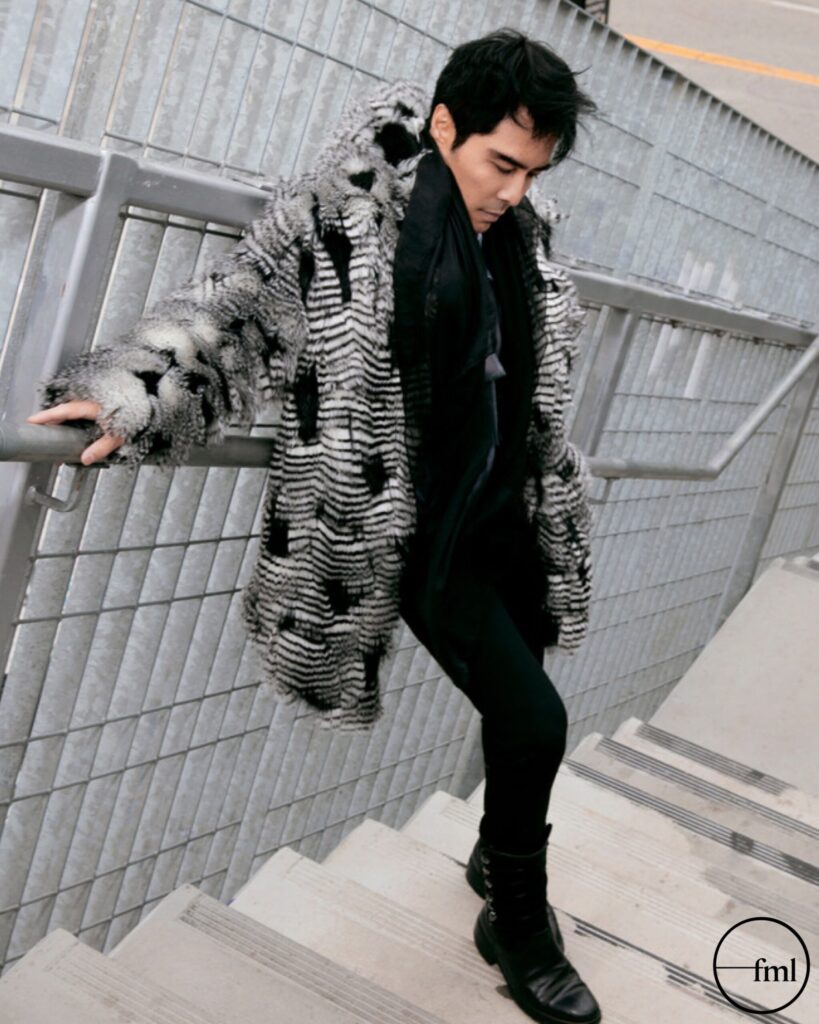
FML Artist Spotlight: Sir Daniel K. Winn
In an art world often divided between disciplines, Sir Daniel K. Winn continues to collapse boundaries with striking precision and deeply personal intent. His latest accolade, a Gold Medal from Mondial Art Academia for the sculpture Chrysalis, feels less like a singular achievement and more like a natural evolution of a career defined by transformation itself. The bronze and Lucite piece is not just an artwork. It is a living fragment of a much larger narrative, one that stretches across memory, medium, and time.

There is something fitting about Chrysalis being both a standalone sculpture and a central motif in Winn’s forthcoming biographical film of the same name. The dual existence mirrors the artist’s own philosophy that life is not linear, but layered, constantly shifting between states of becoming. In this sense, the award recognizes more than technical mastery. It acknowledges an artist who is building an ecosystem of meaning, where sculpture informs cinema, and cinema, in turn, deepens the emotional resonance of the physical work.
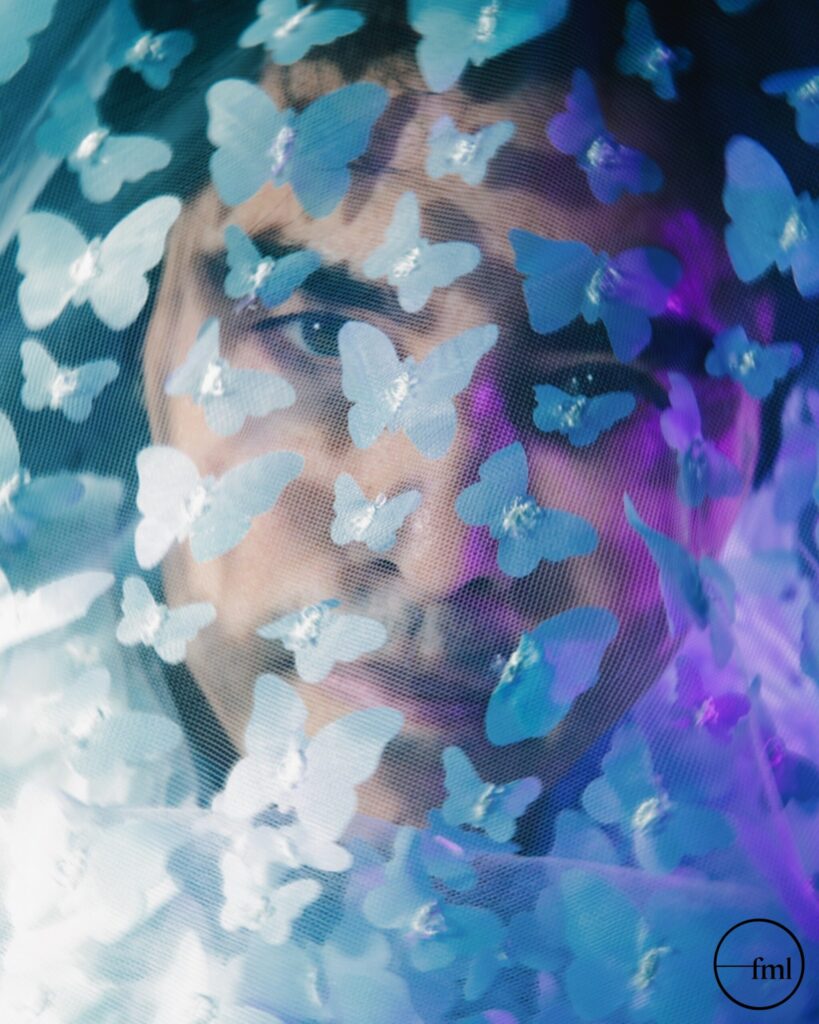
At first glance, Chrysalis captivates with its elegance, a seated female figure delicately holding a butterfly. But linger a moment longer, and the symbolism begins to unfold. The butterfly, an age-old emblem of metamorphosis, is only the beginning. Encircling the base are Lucite spheres containing clock mechanisms, quietly ticking reminders of time’s relentless passage and the fragile nature of transformation. It is a composition that invites contemplation without demanding it, offering viewers space to project their own narratives onto its surfaces.
Yet beneath its polished exterior lies an intensely personal story. The figure itself is a tribute to Winn’s grandmother, a pivotal force in his early life who nurtured his artistic aspirations during the turmoil of wartime Vietnam. Her presence, both in the sculpture and in the upcoming film where she is portrayed by actress Kieu Chinh, anchors Chrysalis in something profoundly human. This is not transformation as abstraction. It is transformation born from survival, memory, and love.
Winn’s recognition by Mondial Art Academia, which also includes a Silver Medal for his oil painting Observation, underscores the breadth of his creative vision. Both works are part of the larger Chrysalis series, reinforcing the idea that this is not a single project but an interconnected body of work. Each piece, whether sculptural or cinematic, contributes to a wider meditation on existence, one shaped by Winn’s signature philosophy of Existential Surrealism. Through this lens, reality bends just enough to reveal deeper truths about free will, destiny, and the human condition.
What makes Winn’s current chapter particularly compelling is how seamlessly he navigates these different realms. Fine art and film are often treated as separate languages, yet in Chrysalis, they become dialects of the same story. The sculpture does not merely inspire the film. It exists as a tactile extension of it, a way for audiences to physically engage with the themes long before or after they encounter them on screen.
As anticipation builds for the film’s 2026 release and its expected festival run, including a planned submission to Cannes, Chrysalis stands as both a preview and a promise. It hints at a story that is as visually rich as it is emotionally grounded, rooted in personal history yet expansive in its philosophical reach.
We sat down with Sir Daniel K. Winn to talk about the journey behind Chrysalis, the interplay between his art and filmmaking, and the life experiences that continue to shape his vision.
FML: You were born in Vietnam and later came to the United States. How have those early experiences influenced your perspective as an artist and as a person?
S.DKW: My perspective as an artist to be able to be both in the Eastern and Western culture allows me to give an overview that is much more in-depth about culture and how people view the world. It gives me an advantage through my experience living as a child in Vietnam and as an adult in the United States. Basically having two worlds has influenced me greatly.
FML: Your career spans painting, sculpture, curation, and filmmaking. How have you navigated these transitions creatively and professionally?
S.DKW: The navigation of having different venues of creativity, like painting, sculpture, curation, and filmmaking, is a process where they overlap and complement each other. My painting accentuates my sculpture. My sculpture does the same. My curation supports both. Filmmaking, post-production, design, cinematography. They all work in tandem as a catalyst to express my philosophy and vision. One complements the other creatively, and professionally I make sure each pushes the other to another level.
FML: Much of your work is rooted in Existential Surrealism. How would you describe that philosophy to someone encountering your art for the first time?
S.DKW: Existential surrealism is something that I coined. It asks, why do we exist? What is the purpose and meaning of life? Those are questions only we can answer ourselves. My artwork is meant to open a window or door for someone to have that first experience. Once they step inside, it is up to them to interpret that meaning. It’s like looking in a mirror and assessing what they see and what they want to become.
FML: Your sculptures and paintings explore big questions about existence, perception, and transformation. What themes do you find yourself returning to repeatedly in your work?
S.DKW: My theme always comes back to reflection and contemplation. What is the purpose of the lessons that happen to us. If you do not experience pain, how do you know happiness? There is no light without dark, no sweet without sour. I return to trying to make sense of why things happen the way they do and understanding that one cannot be without the other.
FML: In Chrysalis, you combine bronze and Lucite to express metaphorical ideas. How do your choices of materials shape the way your work communicates with viewers?
S.DKW: The materials I use are very significant. I start with water-based clay that has quartz crystal, which I feel communicates with me and guides me. Materials like bronze, stainless steel, and lucite are symbolic. Lucite is translucent. It looks like crystal or ice. It represents that ice and water are one and the same, and that existence is eternal. When I combine materials, it is always a symbolic message to communicate my philosophy.
FML: Across painting, sculpture, and film, what remains constant in your artistic mission?
S.DKW: Communication. I want to communicate a visual language that is universal. It doesn’t matter what language you speak or where you’re from, when you see my work, you can understand what I’m trying to convey.
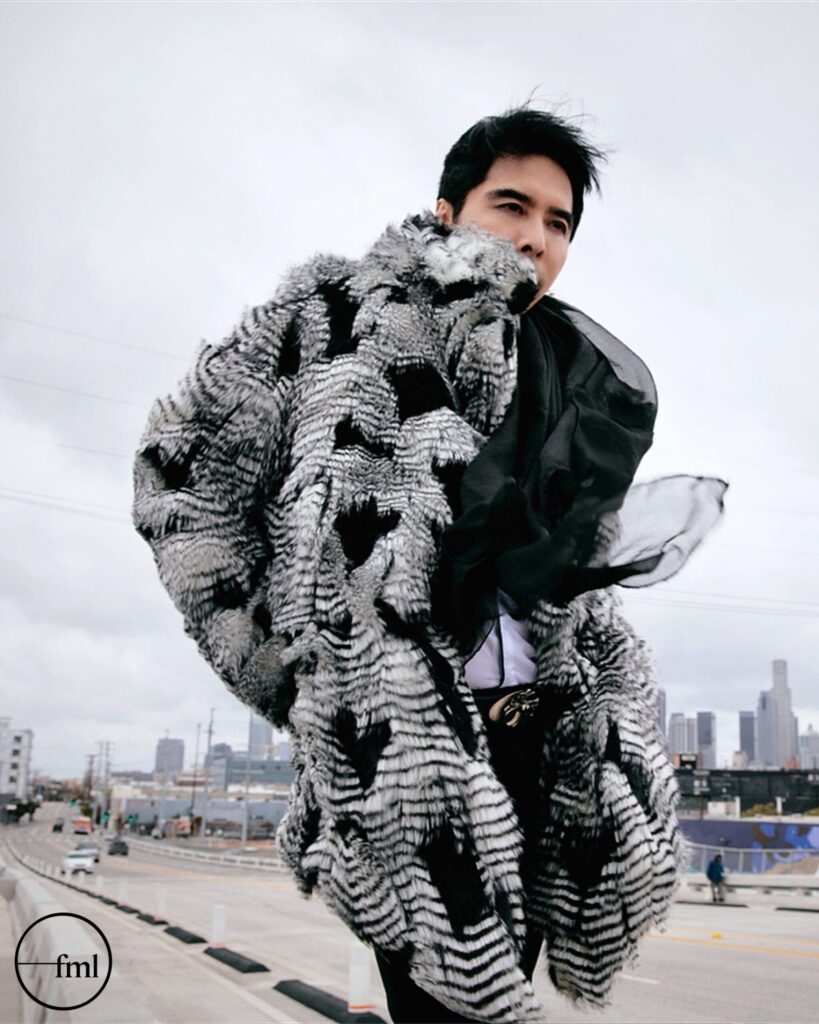
FML: Chrysalis is both a sculpture and an upcoming feature film inspired by your life. What compelled you to bring your personal history into cinema as well as visual art?
S.DKW: Chrysalis represents transformation, the cycle of birth, life, and rebirth. It is inspired by my life, going through adversity and transformation from Asia to America. Through cinema, I want audiences to see that their life and existence are similar, and that understanding can help make humanity a better place.
FML: The film was shot in Vietnam with an international cast. What was meaningful about returning to your country of birth to tell this story?
S.DKW: It was profoundly symbolic to shoot in Vietnam. It’s also the first time in 50 years that Vietnam allowed this kind of filming. I was able to recreate something actual and factual, and to film in the exact locations where I lived. Every shot felt like a memory being revealed. It helped me with my PTSD and gave me closure and guidance.
FML: How does your experience as a visual artist influence the way you approach filmmaking, particularly in shaping visual narrative and emotion?
S.DKW: My experience as a visual artist and my life are one and the same. My childhood, my trauma, my experiences shaped how I approach filmmaking. It is all about emotion. The narrative is about universal human experiences, pain, adversity, joy. I want viewers to understand themselves, not just me.
FML: What do you hope audiences take away from the film that might differ from encountering your sculptures or paintings?
S.DKW: Film acts like a curator or docent. It provides context and backstory. When viewers understand that, they can appreciate my sculptures and paintings more deeply.
FML: Your work often moves between two-dimensional painting, three-dimensional sculpture, and moving images. How do you decide which medium best serves an idea?
S.DKW: They all work together like a formula. Painting, sculpture, and film are all necessary to understand the full message. Each is part of the whole.
FML: When beginning a new project, what comes first for you: concept, emotion, or form?
S.DKW: None. It begins with epiphany. A moment, like a memory or feeling, triggers it. Then comes emotion, then concept, then form.
FML: Some of your projects involve large groups of collaborators. How do you shape a shared vision while allowing individual perspectives to flourish?
S.DKW: It takes a village. Like civilization, it takes many people to create something meaningful. That includes creators and viewers. Without that collaboration, the message cannot be fully communicated.
FML: You frequently bring together people from different fields. What happens creatively when these diverse perspectives meet?
S.DKW: It’s like a melting pot or an orchestra. Different voices come together to create something greater than any one individual. That diversity creates something unexpected and powerful.
FML: Your work often explores abstract and philosophical themes. How do you balance technical or material considerations with the emotional impact you want to achieve?
S.DKW: Both are necessary. Technical skill makes the work precise and complete, but emotion gives it impact. Without one, the other is incomplete. They must work together.
FML: You founded Winn Slavin Fine Art in Beverly Hills. What role do galleries play today and what do you hope your gallery contributes to artists and collectors?
S.DKW: Galleries act as a beacon of hope for artists. They provide recognition and opportunity, especially for living artists. They also allow viewers and collectors to meet the artists behind the work, which was not possible in the past.
FML: Mentorship has played a role in your life. What advice would you give young artists navigating the balance between creative authenticity and commercial success?
S.DKW: It is a fine balance. You must understand both your artistic integrity and the commercial side. There are sacrifices either way. Each artist must decide what they are willing to accept and commit to that path.
FML: You were knighted for your philanthropic work. How does giving back or supporting others connect with your identity as an artist?
S.DKW: It does not define who I am, but it gives me the ability to do more. Recognition opens doors that allow me to expand my philanthropic work and help others.
FML: Your work has appeared internationally. How do you balance global recognition with staying true to your own creative vision?
S.DKW: My vision comes from who I am, my experiences, my culture, and my perspective. It is not shaped by recognition or fame. My goal is to contribute something meaningful and help guide others.
FML: Looking forward, is there a new direction or medium you feel drawn to explore?
S.DKW: There is always something new in terms of technology, new forms, and new ways of expression. I am always interested in exploring and pushing those limits.
FML: When people encounter your art or see the film Chrysalis, what do you most hope they take away from that experience?
S.DKW: I want them to reflect on the questions we all ask. What is the meaning and purpose of life? My work offers one perspective. I hope they use it to better understand themselves.
In the end, Chrysalis is not just a milestone in Sir Daniel K. Winn’s career. It is a convergence point, where memory, philosophy, and medium meet with unusual clarity. The recognition from Mondial Art Academia affirms the technical and conceptual strength of his work, but it also highlights something less tangible. Winn is not simply creating objects or images. He is constructing a continuum, one that moves fluidly between sculpture, painting, and film while remaining anchored in a deeply personal narrative.
What distinguishes this moment is not scale or ambition alone, but cohesion. Every element of Chrysalis, from the tactile weight of bronze to the ephemeral language of cinema, serves the same inquiry into existence, transformation, and the passage of time. It is a body of work that resists easy categorization, not for the sake of novelty, but because its ideas demand multiple forms to be fully expressed.
As the film approaches its release, Chrysalis stands as both an origin and an extension of Winn’s evolving practice. It offers audiences an entry point into his world, while reinforcing his long-standing commitment to pushing beyond traditional boundaries. In doing so, Winn continues to position himself not just within the contemporary art conversation, but slightly outside of it, where disciplines blur and meaning is still being shaped.
Daniel’s #FMLFaves
Favorite Song: Debussy “Arabesque”
Favorite Movie: 2001: A Space Odyssey; The Shawshank Redemption; Planet of the Apes
Favorite Dish: Vietnamese rice crepe
What’s in your bag? A notebook and a pen