FML Designer Spotlight: Sanyam Sharma
In a city that rarely pauses, Sanyam Sharma’s work invites stillness. Based in New York City, the fashion designer approaches clothing as a quiet language rooted in introspection, emotional memory, and the evolving nature of identity. Born in India and shaped by her life in New York, Sharma translates inner reflection into external form with intention and restraint.
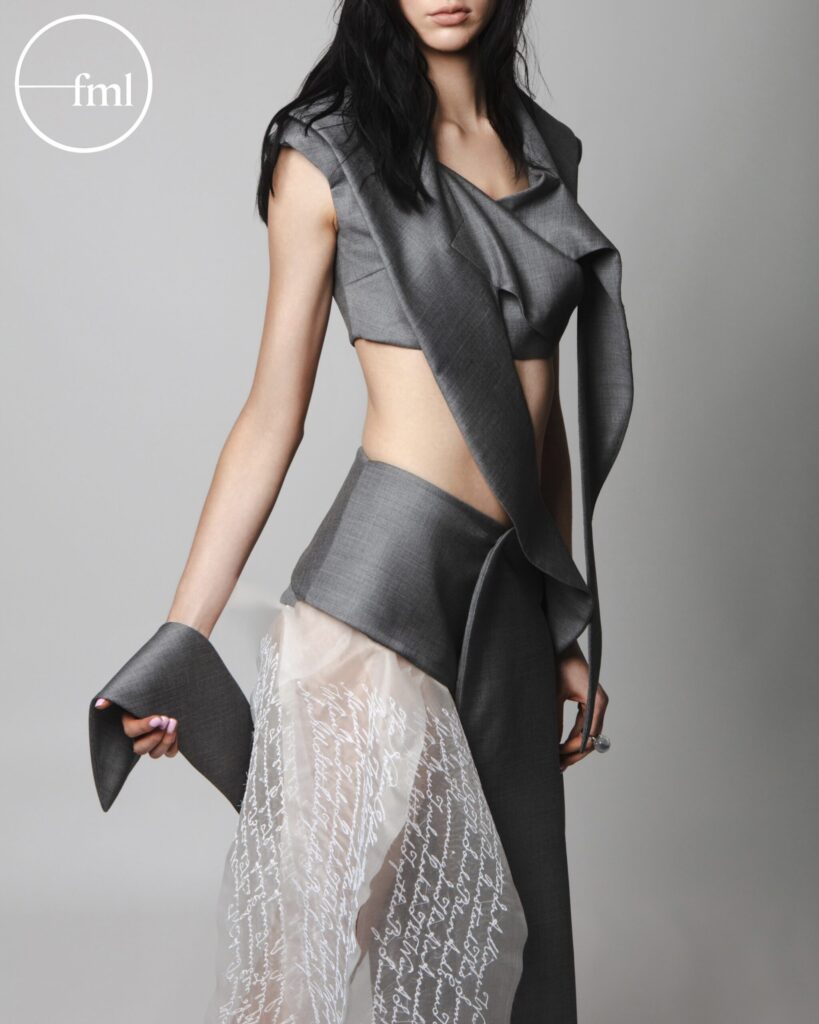
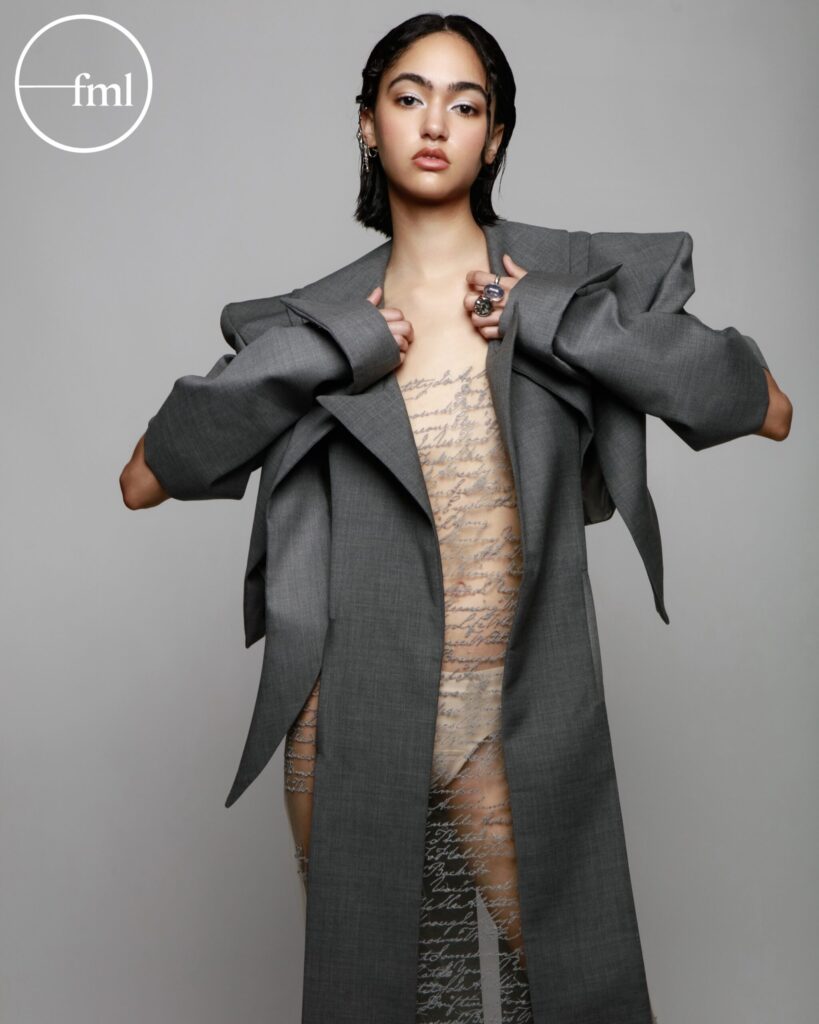
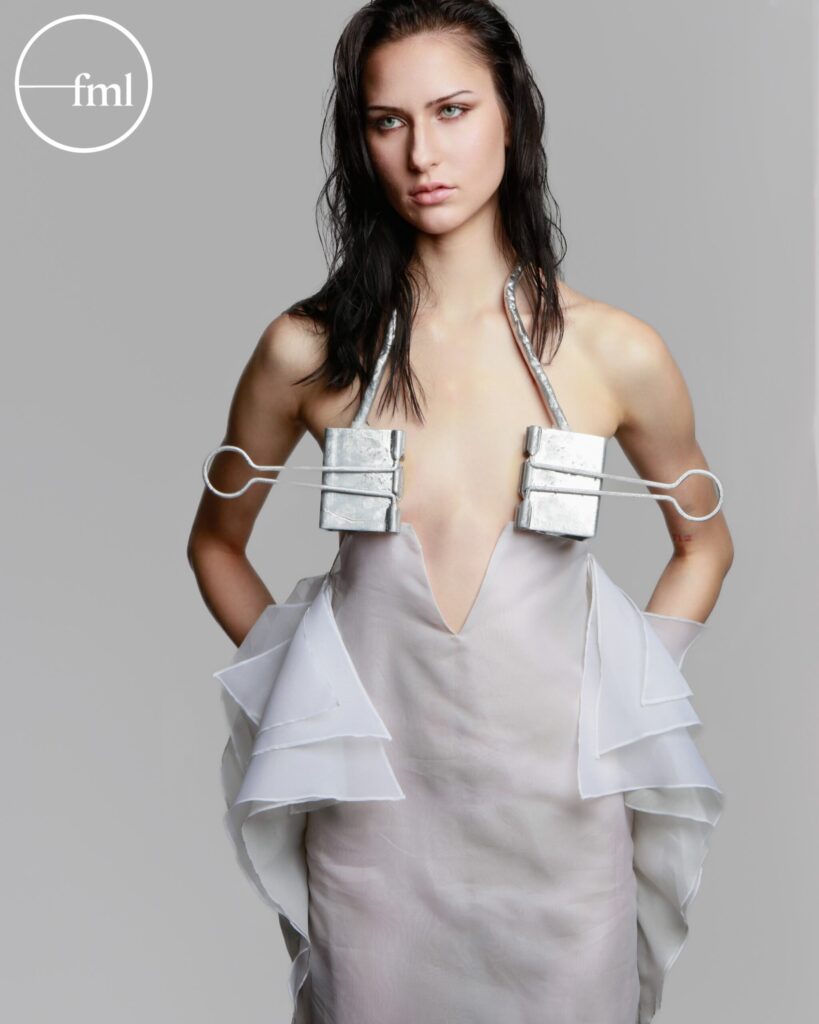
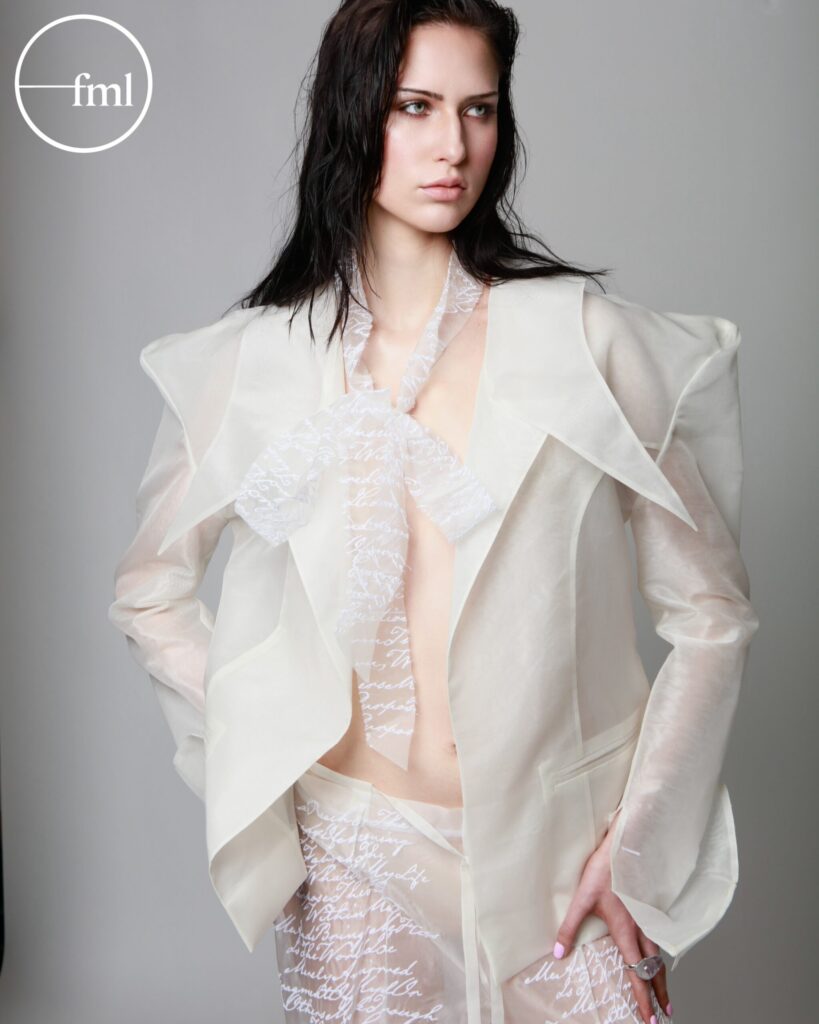
Her brand is grounded in the belief that clothing can function as an emotional archive, a vessel that carries traces of thought, time, and lived experience. Through poetic minimalism and intimate detailing, Sharma creates garments that feel contemplative rather than performative. Structured silhouettes express presence and strength, while sheer layers and delicate surfaces reveal vulnerability, forming a dialogue between what is held close and what is allowed to surface.
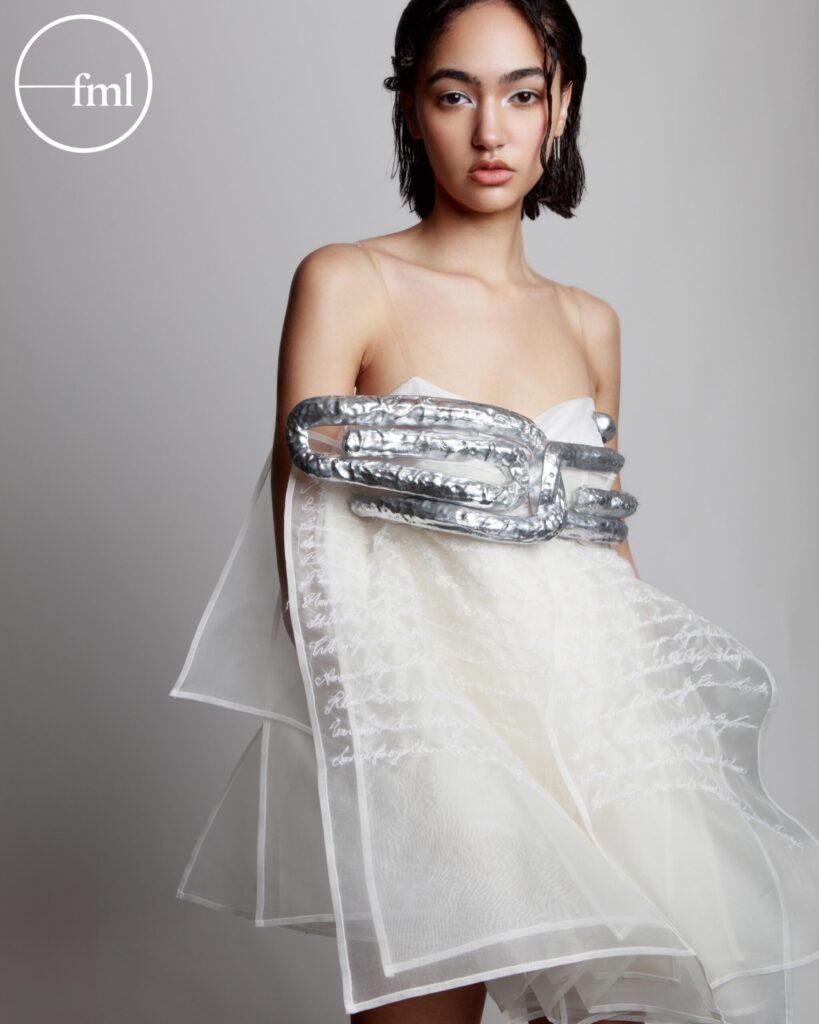
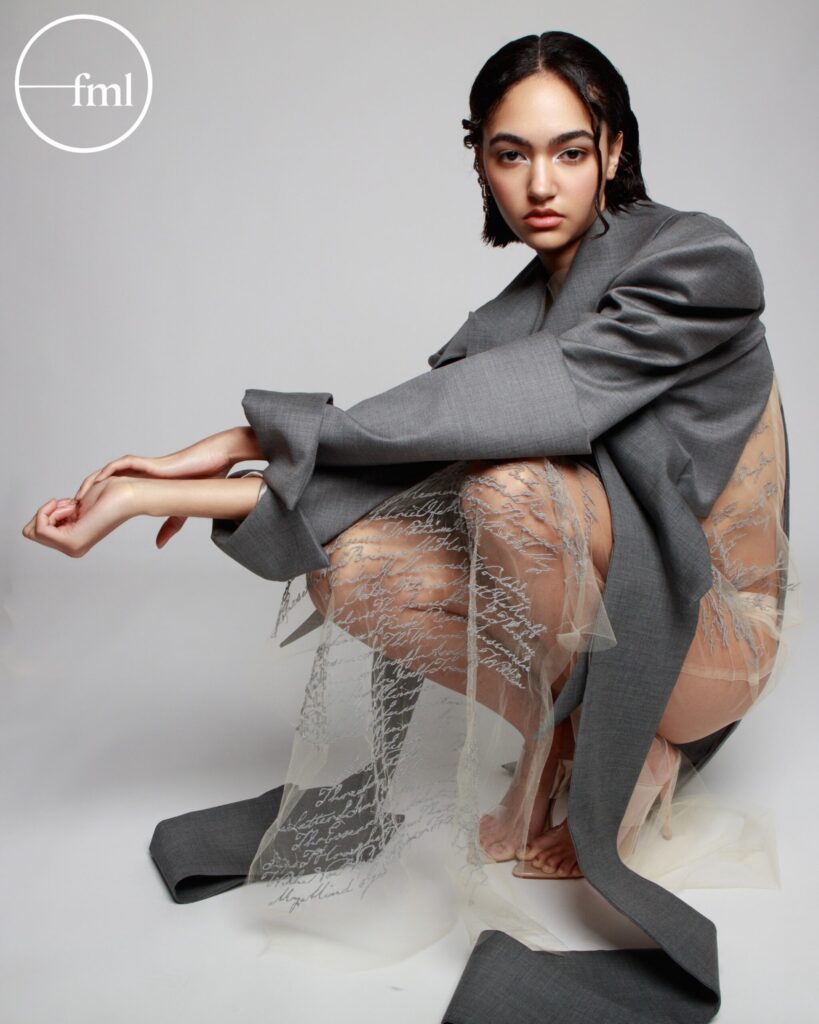
Talent: @jacki @grracetaylorrr
Photographer: @sivan_miller
Makeup: @nathangrossmakeup
Hair: @shonosukehair
Production assistant: @siyasabharrwal
Deeply personal yet universally resonant, her collections draw from journaling, self-reflection, and moral introspection. Fashion, for Sharma, is a meditative practice, a way of asking quiet questions about purpose, identity, and connection. Each piece is designed not only to be seen, but to be felt, inviting the wearer into moments of awareness within the everyday.
With a foundation in fashion design from the National Institute of Fashion Technology in India and an MFA from the Fashion Institute of Technology in New York, Sharma’s conceptual voice was shaped through education, reflection, and lived experience. Her work has appeared in Vogue, 1Granary, The Vanilla Issue, and Up Next Designer, positioning her as a designer whose presence is defined by depth rather than excess.
We sat down with Sanyam Sharma to talk all things Fashion ;
FML: How would you describe your design philosophy, and how does introspection shape your work?
SS: I would describe my design philosophy as intricate intimacy and poetic minimalism. I am deeply inspired by the events, memories, and emotions that shape me and that I continue to learn and grow from. For me, the creative process does not begin with the act of making, but with the journey that leads me there. Introspection is essential to my work because it allows me to understand where a feeling comes from before translating it into form.
My designs emerge from moments of self-reflection, questioning, and emotional awareness. Through clothing, I try to create a space where the wearer can feel truly themselves. I want someone wearing Sanyam Sharma to feel self-accepting, self-reflective, and deeply comfortable in who they are, while also feeling confident, grounded, and powerful. The garments are meant to hold both vulnerability and strength, just as we do.
FML: You describe clothing as an emotional archive. What does that mean to you, and how does that idea translate into your garments?
SS: When I describe clothing as an emotional archive, I mean that I see garments as spaces that can hold memory, feeling, and personal history. Just like a journal or a letter, clothing can quietly carry moments that may not always be visible but are deeply felt. I am interested in how emotions linger, how they settle into us over time, and how they shape who we become.
This idea translates into my garments through layering, translucency, and intimate details that feel almost private, such as cuffs shaped like envelopes. Some elements are meant to be seen, while others exist only for the wearer. I like the idea that a piece of clothing can hold emotion without needing to explain itself.
FML: How has being born in India and building your career in New York influenced your perspective on identity and design?
SS: Being born in India grounded me in my roots and emotional sensibility, while building my career in New York taught me how to translate those internal experiences into a contemporary design language. Living between these two worlds has made me see identity as fluid rather than fixed. There is a constant negotiation between where you come from and who you are becoming, and that tension deeply informs my work, especially my interest in duality, inner versus outer, and strength versus softness.
FML: Your work balances strength and softness. How do you intentionally create tension between structure and vulnerability in your collections?
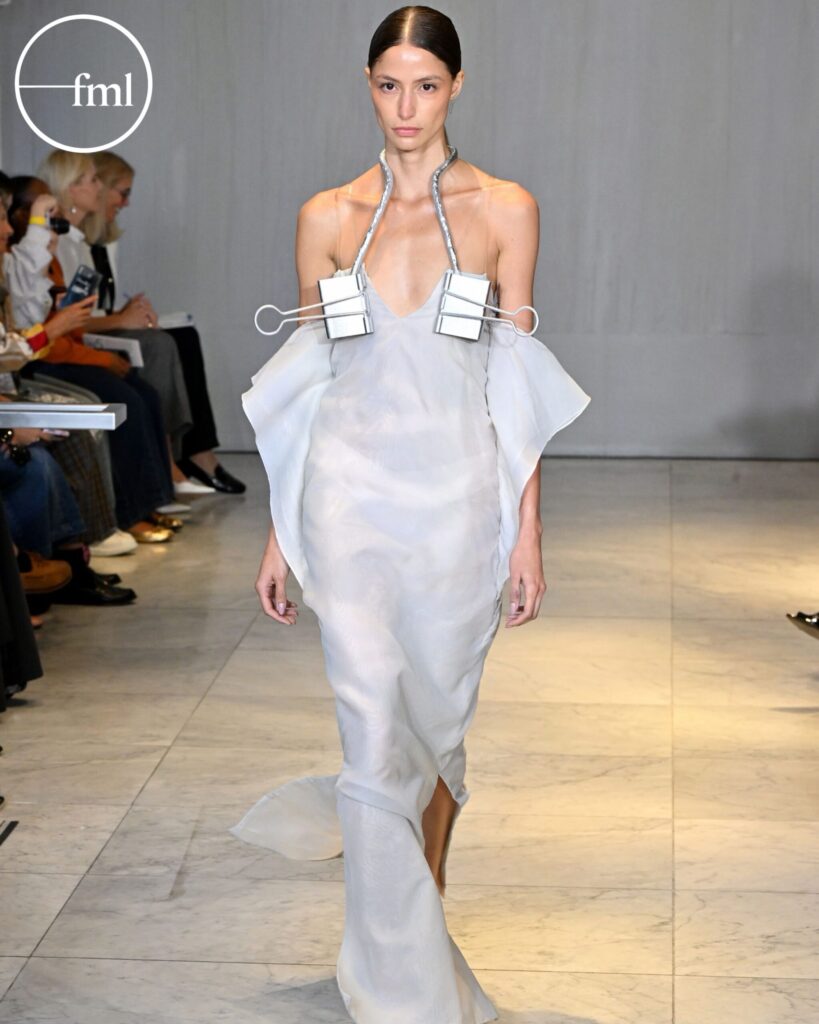
SS: I intentionally create tension by combining structured fabrics and sharp tailoring with soft, translucent materials. Structure, for me, represents protection, presence, and the outer self, while softness allows space for vulnerability and emotion. I am drawn to the coexistence of these opposites because they feel honest and human.
I also work with ideas of first and third degrees, both literal and figurative. Reflection becomes important to me not only as a physical process through surface, layering, or transparency, but also as an inner, introspective act. By bringing these elements together, I allow the garments to hold both strength and fragility at once.
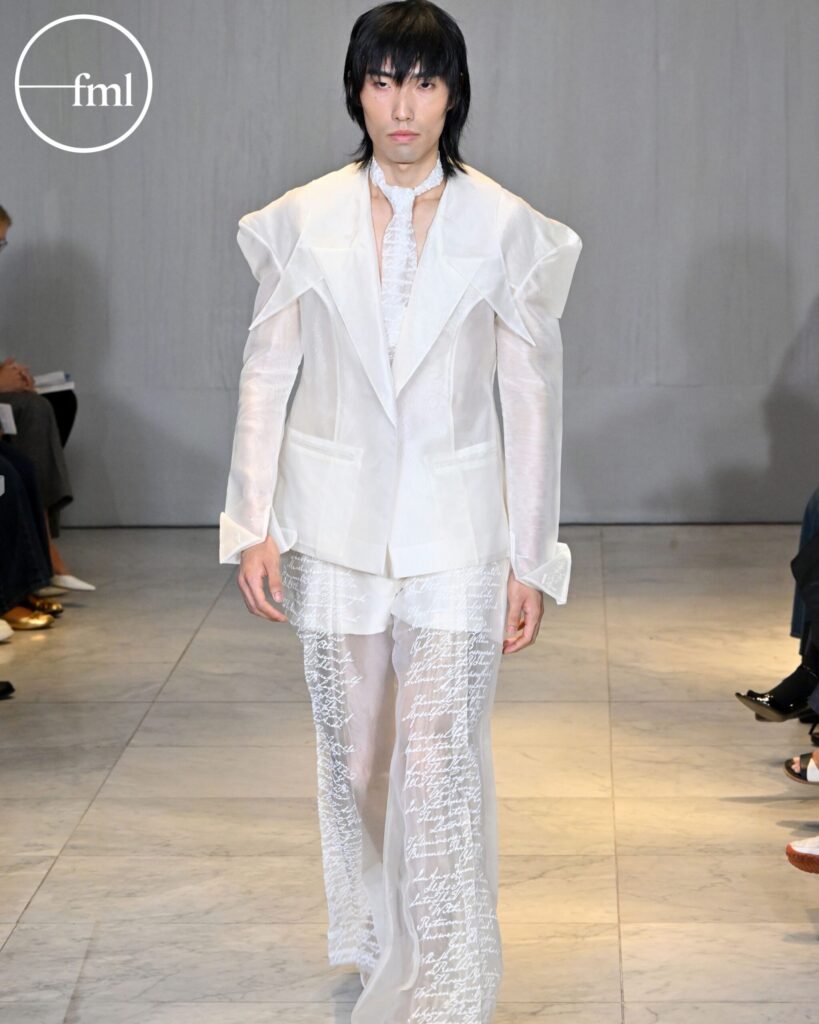
Talent: @wangsweii @polycardinot @theloneblackrose @camilarodrigsz @lyu_haochen
Photos: @gettyimages
FML: Poetic minimalism is central to your aesthetic. What draws you to restraint rather than excess in your design language?
SS: I am drawn to restraint because it allows space for intention and emotion to exist quietly. Poetic minimalism helps me focus on what feels essential, without distraction. Rather than overwhelming the garment, restraint lets subtle details and feelings surface naturally, creating a more intimate and lasting connection with the wearer.
FML: Many of your collections are rooted in journaling and self-reflection. Can you share how personal writing becomes a visual or material expression?
SS: Journaling is where my thoughts slow down and become honest. Writing allows me to process emotions before I try to design around them. Those reflections then find their way into my work through subtle gestures rather than direct translation, such as embroidery, layering, or symbolic forms. The garments hold the feeling of the writing, not the exact words themselves.
FML: How do sheer layers and intimate details function emotionally, not just aesthetically, in your designs?
SS: Sheer layers create a sense of exposure without complete revelation, which feels emotionally truthful to me. They allow vulnerability to exist gently. Intimate details are often meant only for the wearer, creating a private relationship with the garment. Emotionally, they offer comfort and quiet reassurance rather than spectacle.
FML: You often explore what is hidden versus revealed. Why is this theme important to you, both personally and creatively?
SS: I am interested in the space between what we show and what we protect. That threshold feels deeply human to me. Creatively, it allows me to express vulnerability without being literal. Personally, it reflects how identity unfolds slowly, through trust and self-awareness rather than immediate exposure.
FML: How do you want the wearer to feel when they put on one of your pieces?
SS: I want the wearer to feel comfortable in who they are. Held, seen, and grounded. I want the garment to feel like a quiet support system, something that allows them to move through the world with confidence while staying connected to themselves.
FML: You have described fashion as a contemplative practice. How do you hope your work invites stillness or awareness in a fast-paced world?
SS: I hope my work creates a pause. Through restraint, softness, and thoughtful detail, I want the garments to encourage awareness rather than urgency. Even a small moment of stillness can feel powerful in a fast-moving world.
FML: In what ways do your garments reflect evolving identity rather than a fixed sense of self?
SS: My garments are designed to exist between states rather than define one identity. Layering, transparency, and adaptability allow the wearer to change within the piece. I see identity as something constantly unfolding, and my work reflects that openness.
FML: Your design was featured in FML Magazine’s very first issue, worn by Asia’s Next Top Model winner Maureen Wroblewitz. What did that moment represent for you personally and professionally?
SS: It felt deeply affirming to get that opportunity. Being a part of FML’s first issue, which celebrates emerging voices, I felt aligned with the stage I was at as a designer. For the first time, I saw my work exist in that space, and it reminded me of the emotional intention behind why I created it in the first place.
FML: How did it feel to see your work embodied by Maureen Wroblewitz, given her own narrative of individuality and strength?
SS: Maureen carries a quiet strength that resonated strongly within the confines of my work. Seeing her wear the garment felt natural and complete, as though the design had found its voice through her presence. I am extremely grateful to have been part of the campaign.
FML: FML’s first issue celebrates emerging voices. How does being part of that launch align with your own journey as a designer?
SS: I am still in a process of becoming my own, so being part of a platform that celebrates emergence rather than arrival felt refreshing. The launch connected authentically to where I am in my journey. It was less about recognition and more about resonance, about being seen in a space that values curiosity, introspection, and authenticity over finished accolades. It mirrored the way I approach my work as an early designer and reaffirmed that design can be a process of exploration and reflection rather than presentation.
FML: How did your education at NIFT in India differ from your experience at FIT in New York, and how did each shape your creative voice?
SS: NIFT provided me with a strong grounding in discipline, technical rigor, and structured design thinking. It gave me the tools to conceptualize and execute with precision. FIT, on the other hand, encouraged me to slow down, question intention, and explore the emotional and philosophical layers of my work. The combination of these experiences helped me find balance, the ability to create technically sound pieces while imbuing them with introspective storytelling and emotional resonance.
FML: What was the turning point during your MFA at FIT when your emotional framework fully crystallized?
SS: The turning point came when I gave myself permission to make work that was personal without needing to justify it intellectually. I realized that over-explaining or rationalizing my designs diluted their emotional impact. Once I embraced vulnerability and allowed the work to exist as a direct reflection of my inner world, the emotional clarity of my pieces strengthened.
FML: Your work has been featured in publications like Vogue and 1Granary. How has this recognition influenced your confidence or direction as a designer?
SS: The recognition reassured me that there is space for quiet, introspective work. More than validation, it gave me confidence to remain true to my voice and to continue exploring themes that feel personally resonant rather than trending.
FML: Looking ahead, what questions or emotional territories are you most interested in exploring through future collections?
SS: I am drawn to exploring emotional territories like belonging, longing, and the sense of carrying others within us. I want to continue examining what it means to feel at home in one’s own body, how our inner and outer worlds intersect, and the quiet tensions between presence and absence.
Sanyam Sharma’s work resists urgency. In a fashion landscape shaped by speed and spectacle, her garments offer something quieter and more considered. Rooted in introspection and emotional honesty, her practice suggests that clothing can be a companion rather than a statement, something lived in rather than performed. As her work continues to evolve, it remains guided by restraint, vulnerability, and a belief that design can hold space for reflection, connection, and inner awareness.
Sanyam’s #FMLFaves
Favorite Song: “About You” by The 1975
Favorite Movie: Interstellar
Favorite Dish: Gobhi parathas, the ones my mom makes
What’s in your bag?
Business cards, always. Three Miji journals for art, everyday thoughts, and planning, along with my Muji fountain pen. Summer Fridays lip balm, MM Replica When The Rain Stops perfume, Meller sunglasses, hand cream, and AirPods. Lastly, an Oikos protein drink and usually a folded note or loose page I am not ready to throw away.