FML Designer Spotlight: Tinka Weener of Songs of Siren
Songs of Siren made its official runway debut during New York Fashion Week S/S 2026 at the W Hotel Times Square Living Room with The Siren Call, a presentation that marked a significant moment for the emerging luxury house. The showcase positioned the brand within a growing conversation around contemporary femininity, craftsmanship, and intention-led design.
Already worn by figures such as Paris Hilton, Jessica Simpson, and Natasha Bedingfield, Songs of Siren has attracted attention for its considered approach to luxury and its distinctive visual language. The brand’s work balances sensuality with structure, drawing on mythology and symbolism without relying on spectacle.
Founded in 2024 by Dutch-American designer Tinka Weener, Songs of Siren is rooted in slow fashion principles and detailed handcraft. Each collection is shaped by feminist narratives and mystical references, with hand-beaded elements and couture techniques underscoring a commitment to quality and longevity. The siren serves as a recurring archetype, reframed as a figure of autonomy, strength, and self-definition.
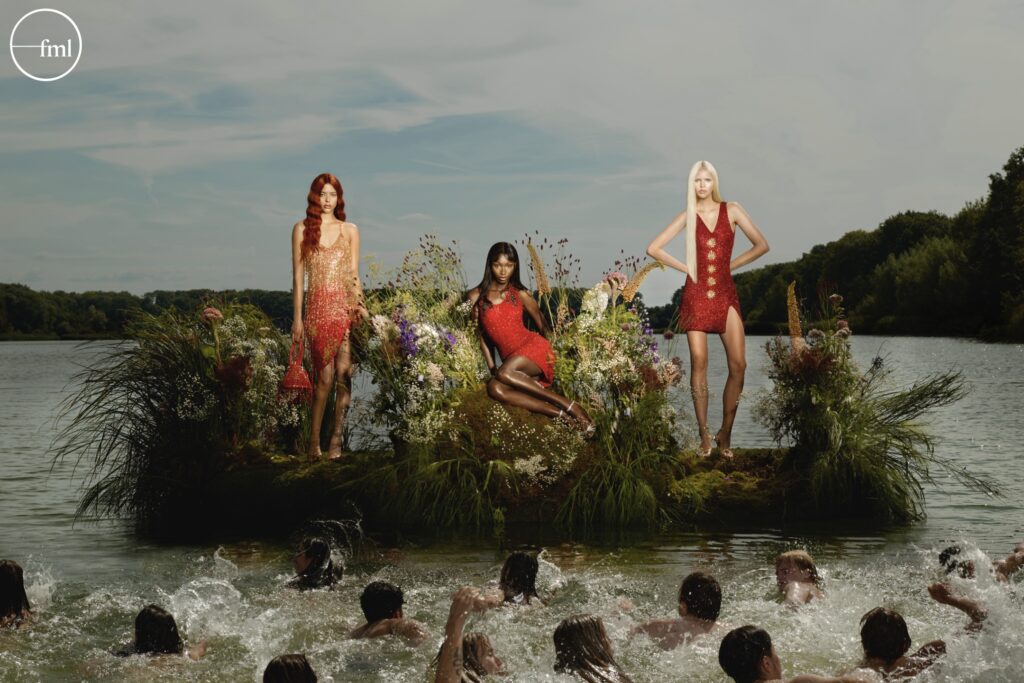
The Siren Call continues this exploration through designs inspired by the natural world, zodiac signs, and ancient archetypes. The collection introduces new silhouettes and textures while remaining anchored in the brand’s core materials and artisanal processes. Softness and strength coexist throughout the pieces, reflecting an approach to femininity that is both expressive and assured.
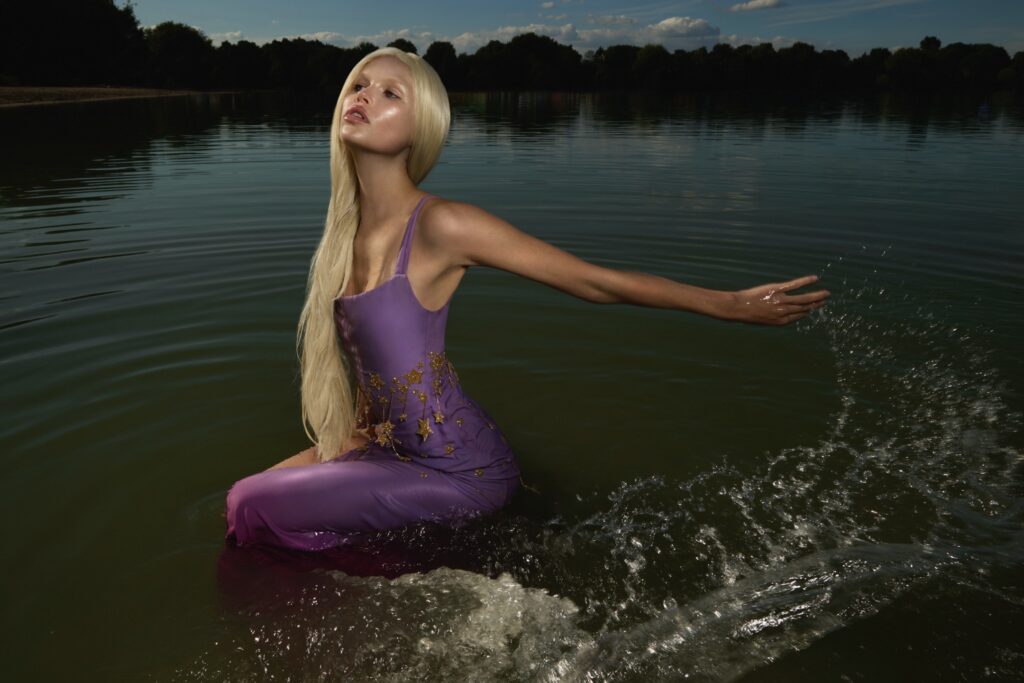
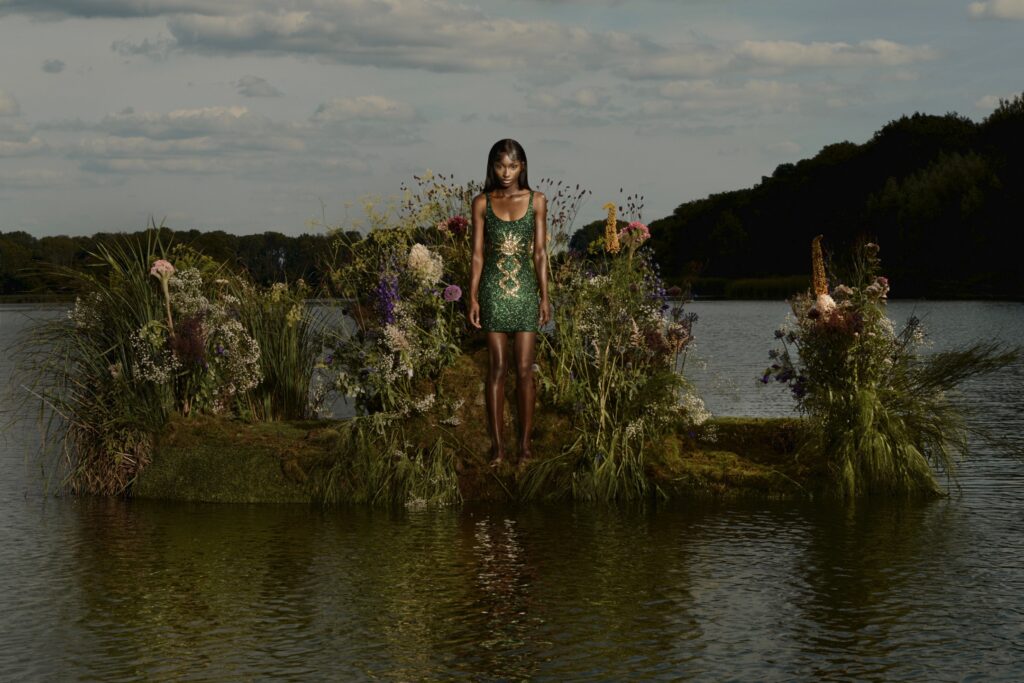
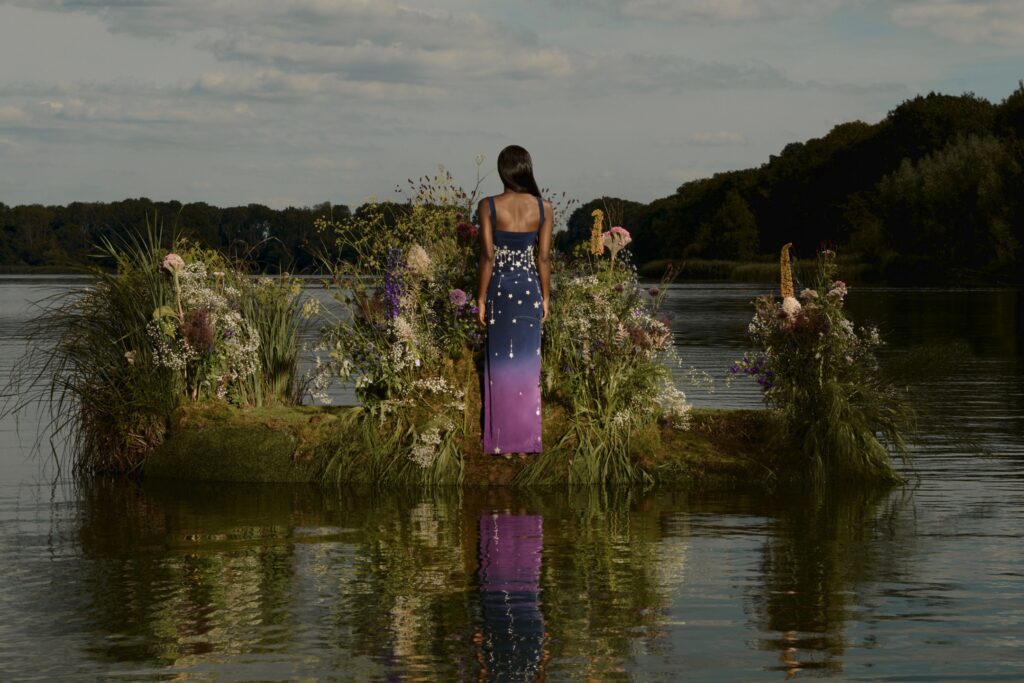
Shot in Amsterdam by creative director Indiana Vos and photographer Dion Bal, the campaign imagery presents the siren as a composed and commanding presence. Set against a serene, nature-forward backdrop, the visuals emphasize stillness, control, and quiet intensity, reinforcing the collection’s themes of beauty, power, and self-possession.

FML spoke with founder Tinka Weener about her journey as a designer, the mythology behind Songs of Siren, and the development of The Siren Call collection.
FML: The Siren Call explores the duality of seduction and power. What drew you to that
tension as the emotional core of this collection?
TW: I was drawn to that tension because the siren is often misunderstood as purely seductive, when in reality her power comes from knowledge, control, and choice. I wanted the collection to reflect that balance: softness paired with structure, beauty paired with strength. The Siren Call is about designing pieces that feel alluring but also deliberate, where femininity is expressed as authority rather than just an ornament.
FML: The siren is often portrayed as dangerous or deceptive. How are you reclaiming that
archetype as a symbol of empowerment rather than fear?
TW: The fear around the modern siren has always come from seeing a woman who’s unapologetic about being seen and heard. I’m reclaiming that by presenting the siren as self-aware, independent, and intentional. In the collection, seduction becomes confidence, not manipulation. And power shows up in pieces designed to take up space rather than apologize for it.
FML: This collection builds on the foundation of your debut while introducing new silhouettes
and textures. How did you know it was time to evolve the brand’s visual language?
TW: I knew it was time to evolve once the debut had done its job of introducing the brand. With The Siren Call, I wanted to build on that foundation by sharpening the silhouettes and being more creative with texture and detail. The evolution came from understanding what needed to stay consistent, and where I could push quietly – refining proportions, adding silhouettes, and textures to reflect a more confident, focused vision.
FML: Your work fuses avant-garde couture with Indian-inspired hand-beading and slow fashion craftsmanship. Why was it important for you to ground such mystical themes in
traditional techniques?
TW: It was important to me because mythology can sometimes feel abstract to people if it isn’t anchored in something real. Traditional hand-beading and slow craftsmanship bring weight, time, and intention to the pieces. By grounding these mystical themes in techniques that are deeply human and labor-intensive, the work becomes more tangible. There is also a lot of history and power in these Indian traditional hand beading techniques which I belief pairs very well with the ancient themes that I like to work with.
FML: Each piece draws inspiration from nature, zodiac signs, and ancient archetypes. Can you
walk us through how one of those influences became a finished garment?
TW: One of the core collection dresses is called “The Serpent” and features a snake carrying an apple in his mouth. The inspiration comes from the biblical story of Eve and the serpent as symbols of awakening. Eating the apple was the first feminist act, choosing knowledge over obedience – and the dress embodies that energy. I started out with sketching the design inspired by biblical drawings, and creating a dress pattern that felt modern and contemporary. After this I always have several fittings with the samples I then create, and I often ask friends to wear these first samples out to get feedback on how they feel in it. That way I can make sure that it’s not just a pretty piece to look at, but also comfortable enough to dance the night away in.
FML: You describe the aesthetic as blending soft femininity with bold femme fatale energy.
What does modern femininity mean to you personally?
TW: To me, modern femininity is about choice and contrast. It’s the ability to be soft without being passive, and powerful without performing masculinity. I’m interested in that tension where vulnerability, sensuality, and strength can exist at the same time.
FML: The campaign imagery presents sirens as sovereign figures rather than muses. How did
you and the creative team approach storytelling for this visual world?
TW: We indeed treated the sirens as sovereign rather than just seductive. The visual world was built around restraint, presence, and control – less performance, more authority. Every image is about self-possession, where the sirens exist for themselves, not the male gaze. My creative director Indiana Vos always finds a really good balance in portraying our brand story.
FML: Shooting the campaign in Amsterdam created a dreamlike, almost suspended atmosphere.
What role did setting play in shaping the emotional tone of the collection?
TW: The setting in Amsterdam I belief created a sense of suspension and contrast. On the main campaign image the sirens are elevated on their beautiful flower adorned island and stand still in powerful poses, while the world around them is in motion. That tension reinforces their sovereignty – they are grounded, self-possessed, and untouched by the chaos.
FML: Songs of Siren is rooted in slow fashion and intentional luxury. How do you balance
exclusivity with accessibility in today’s fast-moving fashion landscape?
TW: We’re very intentional about scale and partnerships. We keep production limited, also for sustainability reasons, and work only with retailers who align with our values and aesthetic. That way, exclusivity is preserved through selectivity, while accessibility comes from being present in the right spaces rather than everywhere.
FML: The collection debuted during New York Fashion Week at the W Hotel Times Square.
What did that moment represent for you as a young luxury house?
TW: Showing during New York Fashion Week truly validated the vision and the quiet work behind the collection. For a young house, it was incredible exciting to have showed both during London Fashion Week and New York Fashion week during the first year of operation. I met so many talented and enthusiastic individuals and this absolutely gave me the push and the motivation to continue working hard and to expand the brand with intention.
FML: Celebrities and style icons have already gravitated toward the brand. What do you think
resonates most with women who choose to wear Songs of Siren?
TW: I think strong women connect with the confidence and intentionality behind the work. Each piece is designed to feel powerful without being rigid, sensual without being performative. I think there is a balance of strength, intuition, and individuality that resonates with women who know who they are and aren’t interested in fleeting trends. The designs reflect a kind of modern siren energy which is something women who wear my pieces, like Paris Hilton, Jessica Simpson, and Natasha Bedingfield, naturally embody.
FML: Handcrafted beading is central to your identity as a brand. What does that level of detail communicate to the wearer beyond visual impact?
TW: Handcrafted beading communicates intention and care. Beyond aesthetics, it creates a sense of weight, time, and value. It reminds the wearer that the piece was made slowly, deliberately, and with respect for her body. It is the opposite of fast fashion, and I love that these are the kind of pieces of which the quality allows you to truly create your own stories in it for many years to come.
FML: You often speak about feminist storytelling through fashion. How do you hope women
feel when they step into a Songs of Siren piece?
TW: I hope that wearing Songs of Siren pieces emphasizes their inner strength, while also highlighting the power of their femininity. An example of this are the business suits I designed for this collection. It has a wink to the feminism of the 80s incorporated into it. It’s my reimagination of what power dressing can mean for the woman of today. Back in the 80s suits were designed to hide softness to fit women into a masculine idea of authority. For this reimagination I wanted to flip that by incorporating delicate embroidery, soft silk fabrics and the usage of rich but very feminine colors such as teal and icy blue.
FML: As the brand continues to expand its mythical universe, what new narratives or
archetypes are you excited to explore next?
TW: I’m interested in expanding the mythology around feminine power – exploring archetypes tied to transformation, intuition, and sovereignty but in a modern way. Such as Medusa who is often misunderstood just like the siren were. The universe will continue to evolve, but always around women as authors of their own narratives rather than symbols within someone else’s story.
FML: If The Siren Call is an invitation, what are you inviting women to reclaim within
themselves?
TW: The Siren Call invites women to reclaim their authority – their desire, their siren voice, and their refusal to be palatable. It’s a call to choose self-knowledge over approval and power over permission. It’s an invitation to reclaim the part of women, and those who identify with it, that was once labeled dangerous.
Through The Siren Call, Songs of Siren continues to articulate a vision of femininity rooted in intention, craftsmanship, and self-definition. Through mythology, meticulous handwork, and a clear point of view, Tinka Weener positions the siren not as a symbol to be feared or consumed, but as one shaped by agency and control. The collection reflects a growing luxury house that values meaning as much as aesthetics, inviting women to step into garments that feel considered, powerful, and deeply personal.
Tinka’s #FMLFaves
Favorite Song:
With the risk of sounding predictable; I’m a big fan of the song “Milk of the Siren” by Melanie Martinez. Her creativity and lyrics are on a different level.
Favorite Movie:
I don’t watch a lot of movies, but I really like “The Holy Mountain” which is a very symbolic movie including strong topics of myth, religion, ego, power and enlightenment. It provides me with a lot of visual inspiration.
Favorite Dish:
Definitely Gado-gado, I’m vegetarian and a big fan of Indonesian cuisine – which is sadly hard to find in Los Angeles.
What’s in your bag?:
I always carry an obnoxiously bright pink pepper spray. Self-protection but make it cute. Also a little sketchbook, contact lenses and basic make up products – as I have a tendency to get sucked into side quest adventures even when going for a simple coffee