Issue 1: Heidi Wong

When you ask Heidi Wong when she first felt she was meant to create, she answers without hesitation: she never did. For her, there was no moment of decision, no clear shift from hobby to purpose. Creation was never something she “started” doing; it was something her body simply knew how to perform. Before she could speak, she could draw. Before she understood language, she understood color, rhythm, and form. Art wasn’t a pursuit; it was instinct.
That same instinct still drives her today. Named one of TIME’s 100 Creators of 2025 and profiled by The Hollywood Reporter as one of the emerging voices reshaping visual storytelling, Wong has become known for her multidisciplinary world, a convergence of poetry, horror, and image.
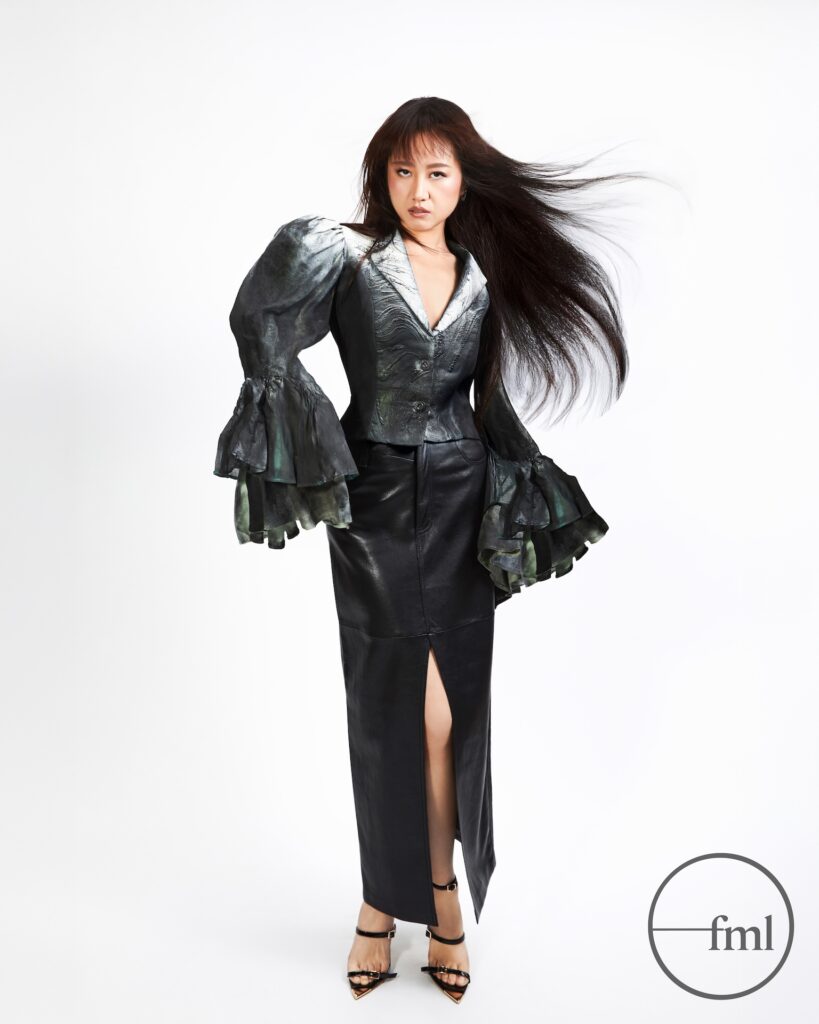
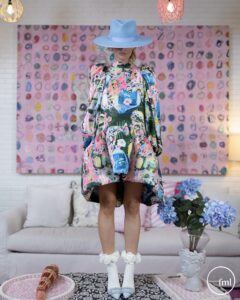
Jacket : Jaixun Li, Skirt : AS by DF, Heels : Floor De Maria

Since moving to Los Angeles, she’s oriented every part of her life toward creative expression. “Even my gym routine is so that I can be a better writer,” she says. Her days revolve around maintaining a balance between body and imagination, so that she can act as what she calls “a vessel for creativity.” There’s no separation between the personal and the artistic; each informs the other in an unbroken loop.
Her visual world is immediately recognizable: shadows that feel cinematic, language that reads like a spell. Yet she insists her aesthetic isn’t built through strict rules, but through elimination. “I don’t always know what I like, but I decisively know what I don’t,” she explains. This process of refining by subtraction creates a style that feels both intentional and intuitive, an identity carved from restraint rather than excess.
When she collaborates with major entertainment companies, Wong’s sense of self remains her compass. She’s grateful for the positive partnerships she’s had, but she sees integrity as an act of refusal as much as acceptance. “The simplest way to avoid losing yourself is to get comfortable with saying, ‘No, this isn’t for me.’ Then actually walk away so something better can arrive.”

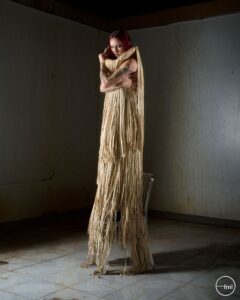
Blazer : Soi Studio, Skirt & Body Armor
That quiet confidence is something she’s earned through solitude. Wong’s creative process is intensely private; most of her work begins and ends alone. The public only sees the aftermath, the moment when what she’s made meets the world. Online, her following continues to grow, but she resists the idea of performance. “When creating, I’m almost always alone,” she says. “It’s only when I’m sharing that it becomes public.”
For someone so often associated with darkness, Wong’s perspective on creative blocks is surprisingly luminous. “Live. Observe and live the art,” she says. To her, being an artist isn’t about production or identity; it’s about perception. “If you’re an artist, you are always creating. You couldn’t stop it if you tried.”
When asked what she would tell her younger self, Wong pauses before giving the kind of answer that feels both defiant and tender: “Don’t listen to anyone except yourself.” It’s advice that mirrors her art—bold in spirit, quiet in delivery, entirely her own.
Heidi Wong’s story is not about reinvention, but about returning again and again to the place inside where creation is as natural as breathing. Whether through poetry, horror, or the vivid stillness of a painted image, she continues to prove that art is not a performance of the self, but the truest way of being it.

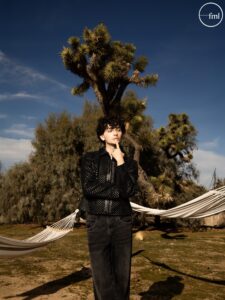
Top : Xijia Cheng, Pants : The Wan Couture, Heels : Claudio Merazzi
Q: What first drew you to creative expression; whether horror, poetry, storytelling, or visual work; and when did you start to feel like it was more than just a hobby?
I was drawing before I could speak. I didn’t form a full sentence until almost three years old, but I could draw objects at eleven months. The concept of “hobby” or “job” or even “artist” didn’t exist to me nor has it ever mattered. It didn’t feel any kind of way. There was no shift. The act of creation, even maneuvering through mediums as I leave childhood and move into adulthood to see what fits right for me at each stage of life, has always been an integral and non-negotiable act that my body simply performs. Like how the body knows to wake up. (PS: the synesthesia might be speaking for me here! Who knows!)
Q: You’ve described yourself as ‘dedicated to creativity in all its forms.’ What does that look like on a day-to-day basis?
I moved to L.A. this past summer to fully live by that. Everything in my life is oriented and dedicated to art and creation. Even my gym routine is so that I can be a better writer. I make a very intentional effort to see myself, mind and body, as a vessel for creativity.
Q: You’ve collaborated with major entertainment companies like Netflix and Warner Bros. How do you maintain your voice within those commercial partnerships?
I have only had positive experiences with all entertainment companies I have accepted collaborations from. But to answer the question conceptually, like in any situation, the simplest way to avoid losing yourself is to get comfortable with saying “no, this isn’t for me.” And then actually walk away so something better can arrive.
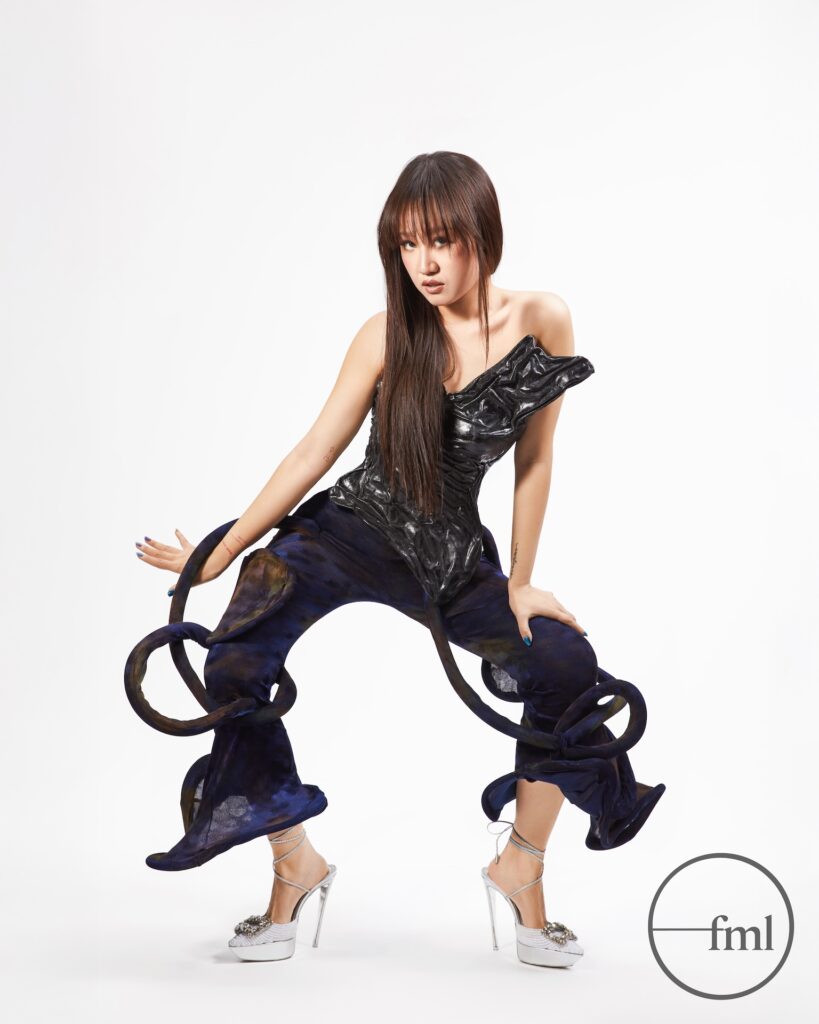
Top : Diana Couture, Pants : Xijia Cheng, Shoes : Claudio Merazzi
Q: Have there been moments where you’ve felt creatively stuck? How did you work through that?
Live. Observe and live the art. If you’re an artist, you are always creating art. You couldn’t stop it if you tried. Being an “artist” is not an identity or a job title, it’s a lens in which particular people internalize the reality of their lives.
Q: Your visual aesthetic is very distinct. How intentional is your design process when it comes to things like lighting, color, or fashion?
I am always intentional, but I’m not always strict. My style in writing, movies, fashion, consists of a curated aesthetic that comes from eliminating what I can identify as “not me.” Long story short, I don’t always know what I like and I tend to like many things at once, but I always and decisively know what I do not like. That’s what intentional style means to me.

Q: How do you balance your public persona with your private creative life?
When creating, I’m almost always alone. Whether it’s filming my videos, writing scripts for videos, writing in general. My creative process is solitude. It’s only when I’m sharing that with the world that it becomes public.
Q: If you could turn back time and meet your younger self, what would you tell her?
Don’t listen to anyone except yourself.
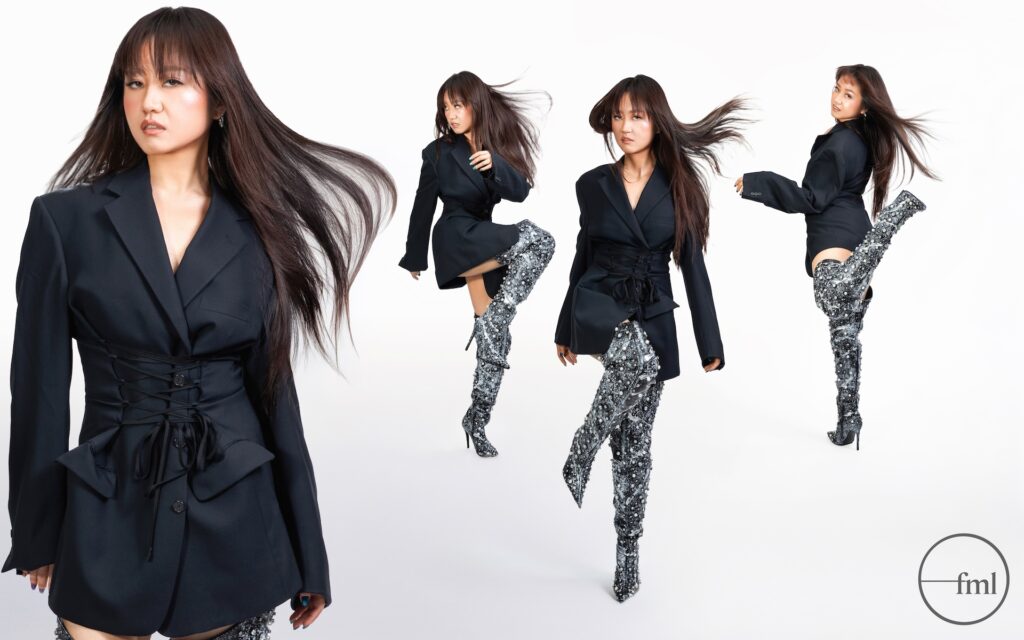
Blazer : Tanaka Vintage, Boots : 803life
EIC:
Gina Kim-Park ( @ginakpark )
Photography & Creative Direction:
Reinhardt Kenneth ( @reinhardtkenneth )
Muse:
Heidi Wong ( @itsheidiwong )
Production Manager:
Min Lee ( @lee.a.min )
Fashion Stylist:
Priscila Natalina ( @priscillaxns )
Manicure:
Anna Tran ( @chibyannatran )
Hair Stylist:
Lavi Maspero ( @lavimaspero )
Make Up Artist:
Reyna Khalil ( @reynakhalil )
Lighting Director & BTS:
Ralphy Valle ( @ralphyvalle )
Digitech:
Suimay Lee ( @suimaylee )
Fashion Assistants:
Xijia Cheng ( @xijiacheng_ ) & Jiaxun Li ( @jiaxunlii )
Retoucher:
Valeria Mediana ( @mediana.retouch )
#FMLMagazine