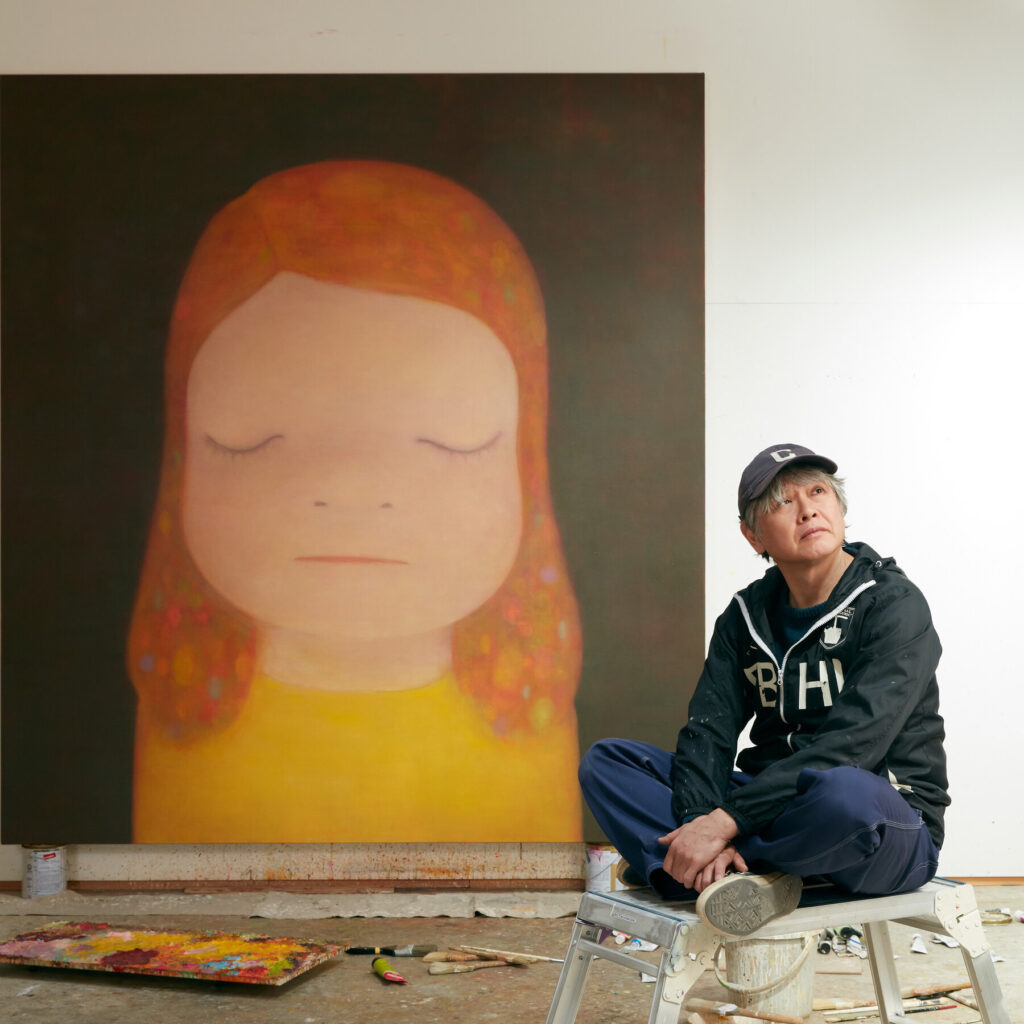
For Nara, the shift is significant on several fronts. It aligns him with one of the world’s most influential contemporary galleries, suggesting an intention to further amplify his market profile and institutional visibility. His work has become increasingly relevant and visible through exhibitions and in global art discourse. For collectors and institutions, the transition signals that Nara’s career is being managed with an eye toward longevity, legacy, and global reach.
Born in 1959 in Hirosaki, Aomori Prefecture, Japan, Nara developed a distinct visual vocabulary of wide-eyed children, animals, and figures that appear at once vulnerable and defiant. His early years as a latchkey kid in rural Japan, exposure to US Forces radio and pop, folk, and rock music, and his formative studies in Japan and Germany shaped the undercurrents in his work: introspection, solitude, rebellion, innocence. His media expanded from painting to drawing, sculpture, and installations. His works are often described as self-portraits, emerging from dialogues with himself. The melancholic, rebellious characters evoke childhood, memory, and emotional states rather than narrative clarity.
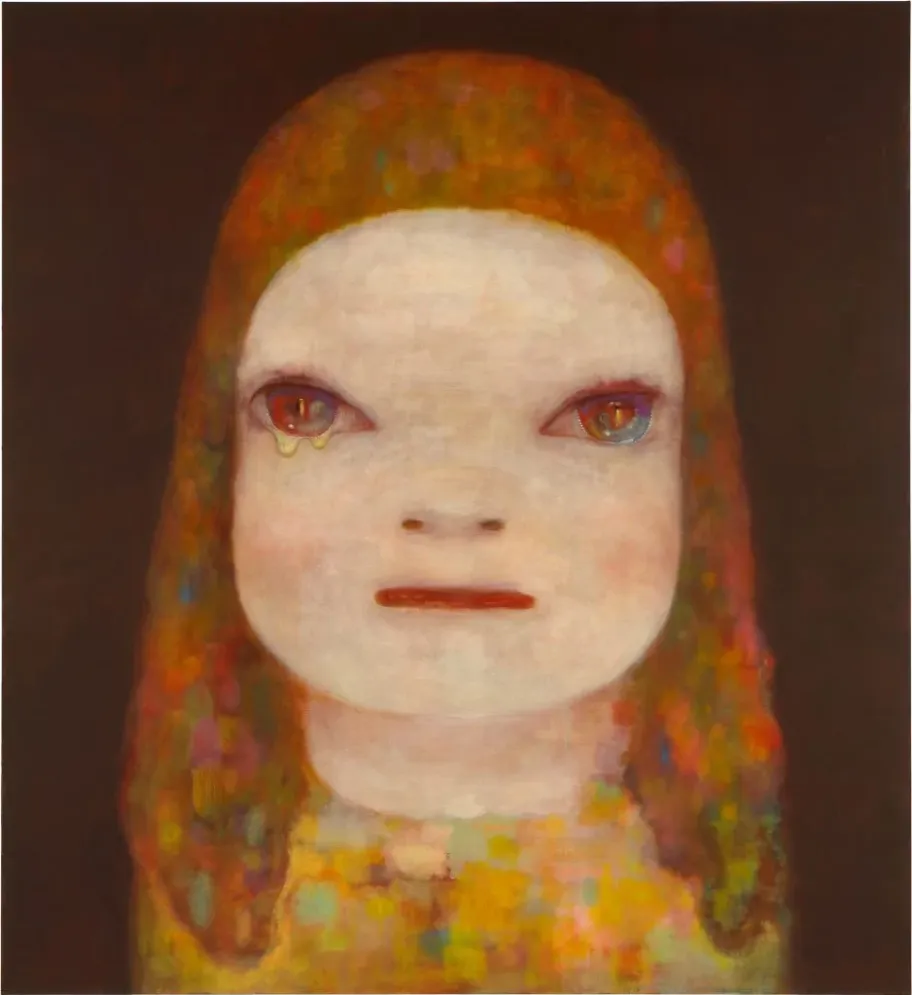
©Yoshitomo Nara/Collection of the Guggenheim Museum Bilbao
Nara’s exhibitions underscore his importance. Recent solo exhibitions include his large European retrospective in London, and his artwork is widely collected globally, held in institutions such as the Guggenheim Museum Bilbao, Los Angeles County Museum of Art, and Museum of Contemporary Art Tokyo. On the market side, his iconic works continue to draw strong demand. The timing of his gallery transition suggests a recalibration of his market positioning.
David Zwirner has indicated that Nara’s first solo show with the gallery will take place at the New York flagship space. The anticipation is significant, marking the first major presentation of his work under the new gallery relationship and potentially introducing new work, installation formats, or expanded output. Given Nara’s previous large-scale installations and interest in space and audience engagement, the art world will be watching closely to see how his practice evolves.
With the backing of David Zwirner’s global resources and continued collaboration with his agent, Nara is positioned for another phase of global expansion. For his practice, this could mean a deeper institutional footprint, new market opportunities, and perhaps a shift in narrative from a pop-culture frame to one emphasizing legacy, socio-political resonance, and material experimentation.
Nara’s work has always struck a chord because it combines visual immediacy with emotional authenticity. In an art world often dominated by concept or theory, his practice remains grounded in feeling, memory, and visual rhythm. The move to David Zwirner recognizes that his voice merits one of the most powerful platforms in contemporary art.
This gallery shift is more than just a change of address. It marks how Yoshitomo Nara’s career is being staged for the next chapter. As his work continues to be re-evaluated, collected, and exhibited globally, this transition opens the possibility of new work, new scales, and new dialogues. Whether one is familiar with his little characters or sees his sculptures for the first time, this is a moment of recalibration not just for the artist, but for what his work can do in the world.