FML Music Spotlight: MINIJOY
In an era where genres dissolve as quickly as borders, MINIJOY exists somewhere between movement and emotion. DJ, rapper, singer, and producer, she has built a world where dance music becomes more than rhythm. It becomes a language for vulnerability, connection, and belonging. Her work is not driven by spectacle alone, but by the belief that music has the power to dissolve distance, inviting strangers onto the same dance floor and, for a moment, into the same emotional space.

Born and raised in Seoul, Korea, MINIJOY’s creative journey has been shaped by constant transformation. A childhood spent questioning convention eventually evolved into a career that refused to remain confined to a single identity. She first established herself within Seoul’s hip-hop community, organizing concert series and cultivating a thriving creative scene before the uncertainty of the pandemic redirected her path. Living abroad introduced solitude, and with it, a new form of expression. Rap gave way to melody. New York introduced her to DJ culture, Toronto expanded her creative community, and Los Angeles offered the freedom to fuse every chapter of her artistic evolution into one unmistakably personal voice.
The result is a sound that feels both intimate and expansive. Pulling from electronic music, house, hip-hop, and R&B, MINIJOY transforms deeply personal experiences into songs designed for collective release. Her performances become spaces where emotion is shared rather than hidden, where individuality is celebrated, and where cultural differences fade beneath a common pulse. Rather than separating artist from audience, she invites listeners into a conversation about identity, freedom, and what it truly means to connect with another person.
That philosophy reaches its fullest expression in LOVE ME, her debut album arriving July 16, 2026. Revisiting earlier R&B compositions through the lens of house and techno, the record explores the many dimensions of love, from longing and vulnerability to acceptance and self-discovery. At its core is a quietly universal realization: before asking someone else to love you, you must first learn to extend that love outward and, ultimately, inward. It is a message that mirrors MINIJOY’s artistic vision itself, reminding us that the most powerful music often begins not with sound, but with honesty.
FML Magazine sits down with MINIJOY in Los Angeles’ vibrant Arts District to discuss the evolution behind LOVE ME, the cities that shaped her creative identity, and why building genuine emotional connection remains at the center of everything she creates.
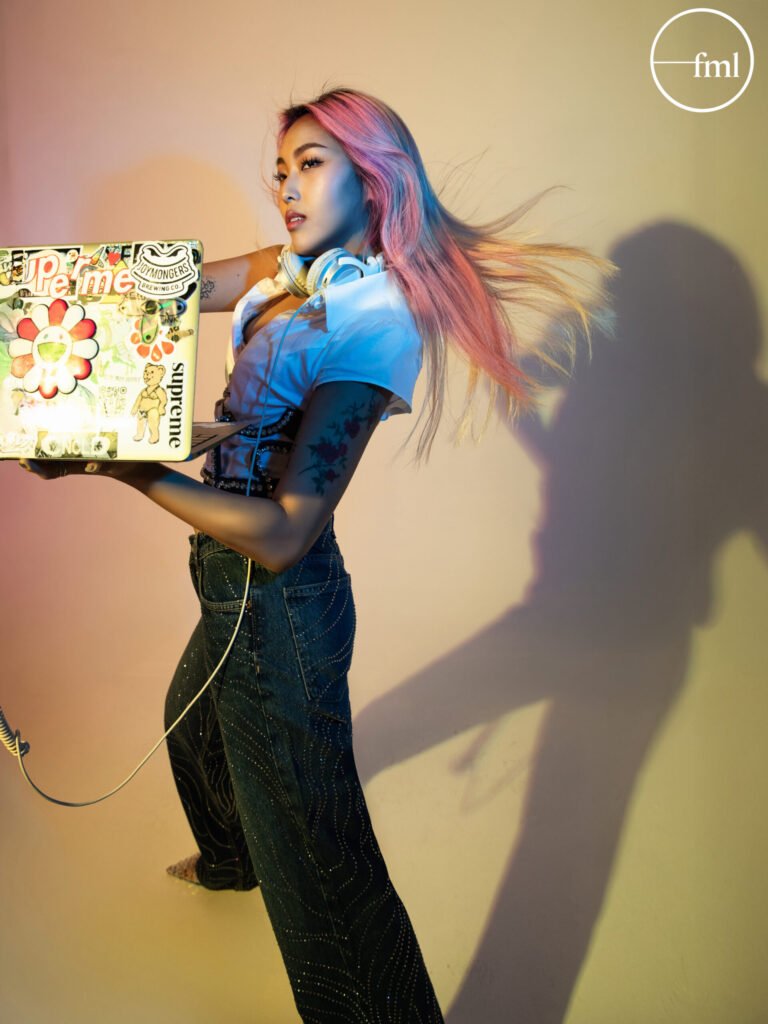
Q: Your music is deeply rooted in ideas of emotional connection, self-expression, and unity. When did you first realize those themes would become the foundation of your artistry?
MJ: In 2023, when I was living in New York, I had my first club show booked. But right before it, my grandfather passed away back home. It was the first time I’d felt that kind of grief, losing someone that close. He always told me to go out into the wider world, and no matter what I did, he was proud of me and cheered me on. While preparing my DJ set, I found myself looking back on my whole life, thinking about what story I actually wanted to tell. I’m not a scientist or a mathematician, but I wanted to create something that could move the world for the better, and I realized this was a theme that could actually do that.
Q: Growing up in Seoul, you often questioned societal expectations around identity and self-expression. How did those early experiences shape the artist you’ve become today?
MJ: Growing up in Korea, I think I was expressing a kind of rebellion against prejudice and pressure. If I laughed too loudly, I’d hear, “Girls shouldn’t laugh like that. Be more reserved.” In middle school, we weren’t allowed to dye our hair or grow it long. Every time something like that didn’t make sense to me, I’d push back even harder, almost like a contrarian. I think wanting to become a rapper came partly from that same instinct. These days, I try not to hold onto stereotypes, to stay open to different opinions, and to keep listening and trying to understand more. We’re all different, yet somehow the same, and I learn a lot just by holding onto that.
Q: You began your career as a rapper, but your sound has since evolved into a blend of electronic, house, hip-hop, and melodic songwriting. What inspired that transformation?
MJ: When I started as a rapper, I thought lyrics were the tool that could express me best. I was actually a really shy person, and the title of “rapper” gave me permission to be honest and speak my mind. But sometimes there are emotions words just can’t capture, feelings you sense more through atmosphere than language. I think I wanted to bring in other tools to reach those feelings too.
Q: You once said that moving abroad changed everything. Looking back, how did living alone during the pandemic reshape both your life and your music?
MJ: In Korea, I was always busy. There wasn’t a single day I didn’t leave the house. Billboards, media, family, friends, I was constantly surrounded by influence from something. But when I moved abroad, and then the pandemic hit and I was alone, I finally had the chance to actually explore who I was. I’d gone to design school partly thinking it would help my music, but at some point I found myself questioning why I was seriously considering switching to being a designer instead. That’s when I realized I had always been choosing “plan B.” So I decided to finally try plan A, the thing I’d always put off. Missing my family and friends from so far away also made me more grateful for life itself.
Q: Each city seems to have given you something different. Seoul introduced you to hip-hop, New York taught you to DJ, Toronto brought collaborators, and Los Angeles gave you creative freedom. How have those places become part of your artistic identity?
MJ: In Seoul, there was a rebellion in me against prejudice and stereotypes, and I think that’s what made me a hip-hop rapper. In New York, while I was learning to DJ, I was also surrounded by people and cultures completely different from my own, and understanding that diversity naturally shaped the kinds of themes I now want to explore in my music. In Los Angeles, I remember thinking, “I could build my team here.”
Honestly, I’m not sure exactly how each city shaped who I am today. I think I just moved on instinct. “Ohhhh, this sounds fun.” “I want to make this project with these friends.”
Q: Before pursuing your solo career, you built a hip-hop crew and organized concerts that attracted more than a thousand people. What did that experience teach you about building communities through music?
MJ: I learned that a show is something everyone in the room builds together. The artists, the crew, the crowd, all of it. Respecting each person’s part on stage, enjoying the process itself, and actually understanding how a show comes together, that alone taught me so much. In the end, I think I learned how much power there is in building a good team, good people, and a good time together.
Q: Your debut album LOVE ME revisits some of your earliest R&B songs through the lens of house and techno. What was it like reimagining those songs from a completely different perspective?
MJ: In “Love Me,” I wrote about losing myself in love. In “When I See Your Eyes,” I’m happy because I’m in love, but there’s also this fear that, in the end, we’re all alone. Yet that’s exactly why I’m grateful for this moment. Writing it, I realized I was really sad back then.
“Bae” was written from the feelings of a student in a relationship, and “Call Me” was from a time I was wandering through a lot of dating and relationships. Looking back, I thought I was kind of cute back then too. Rewriting these songs from a completely different perspective, I worked through everything I’d learned from loving and making mistakes, and how I want to carry the feeling of love going forward, hoping people might come to see love from a more positive place too.
Q: The album explores love from many different angles, but ultimately arrives at the idea that loving yourself is essential before asking someone else to love you. Why was that message important for your debut project?
MJ: I kept asking myself, what even is love? And I realized, if I can’t even define what love means to me, how could I expect someone else to give it to me? What one person calls love might not be what I call love. So I think “loving yourself first” really means knowing what your own love looks like. Only once you know that can you actually ask someone to love you that way.
I also think it makes me feel good to express love and show love to someone. So it was also about trying to love without expecting anything in return, and seeing what that feels like for yourself.
Q: Was there a particular song on LOVE ME that challenged you emotionally or creatively more than the others?
MJ: Definitely “Where Am I,” a reinterpretation of “Love Me.” Making it, I was so sad, and I really struggled with how to work through that. If “Love Me” was about asking someone else to love me, “Where Am I” turns that same line inward, toward myself. It was sad, but I learned a lot about myself through it. Don’t beg for love. Don’t look for love. Just love. I probably hurt someone’s feelings in a relationship too. Forgive me, and I hope everyone gets to feel happy now.
Q: House music has always been associated with community and togetherness. What is it about electronic music that allows you to tell such personal stories?
MJ: In the repeating rhythm, the parts without lyrics become a space where I can imagine my own experiences and thoughts. The lyrics point you in a direction, and the rest is carried by the melody and rhythm. There’s an emotion that comes through rhythm alone, even without words. These stories started out personal, but I think they’re feelings everyone carries. A lot of songs that seemed to be about romantic love, I later realized were really about family or friends all along. Electronic music’s structure also feels like watching a film, using sound design and effects to hold something delicate.
Q: Your work feels equally at home on a festival stage and in an intimate listening session. How do you balance creating music that’s both emotionally vulnerable and designed to move a crowd?
MJ: I haven’t thought about it too deeply, but I think the quiet listening session is about connection, and the festival stage is about release through that connection.
Q: As a DJ, producer, rapper, and singer, you wear many creative hats. Do those different roles ever compete with one another, or do they naturally complement each other?
MJ: As a rapper, I can just speak honestly and freely. It gets a little more playful. As a singer, something in me gets softer, more feminine. As a producer, I get really serious. And as a DJ, I’m basically running the whole time. It feels like being a conductor. Each role uses a different tool, and they understand and support each other in a lot of ways. Though sometimes, being a producer means I hear too much detail, and I end up focusing too much on the technical side while DJing. I try to keep a good balance. Also, on “Love Me” and some songs from last year, the “rapper me” might be a bit wild and actually clashed a bit with the rest, so I’ve been holding that side back for now.
Q: Many of your performances emphasize creating a space where strangers can connect. What does an ideal MINIJOY show feel like from your perspective?
MJ: I want everyone to feel welcome, like they’re surrounded by people who fully understand them, comfortable, happy, and having an exciting time.
Q: You’ve performed across North America, from intimate club venues to major festivals. Has performing for such diverse audiences changed the way you approach your sets?
MJ: If I have time, I try to arrive in the city a day early just to feel what it’s like. Understanding the local atmosphere and culture and weaving that into the set, or showing people a new side of songs I already have, that’s part of the fun. Imagining the actual day of the show while I’m building the set is something I really enjoy too.
Q: Some of the biggest names in electronic music have supported your work. What has it meant to receive encouragement from artists you’ve admired?
MJ: When things get really hard, I often find myself doubting. Am I on the right path? Am I doing well? But when artists I admire support my work, it reminds me, okay, I am doing okay. It reminds me why I started and why I want to see this journey through. Getting to hear their stories and talk with them has taught me a lot too.
Q: Your music often speaks about freedom, identity, and belonging. In today’s increasingly connected yet divided world, what role do you believe artists have in bringing people together?
MJ: I think it starts with everyone being willing to listen and understand each other. I try to express my own values through my music, and I hope people can hear it, understand it, and feel it. Making people move and dance, while also making them pause and think about these themes again, I think that’s what an artist can do.
Q: Authenticity is a recurring thread throughout your work. Has it become easier or more difficult to remain authentic as your career continues to grow?
MJ: Authenticity… sometimes it makes me feel too exposed, honestly. (Laughs.) It’s not really that it’s gotten easier or harder. As I learn and grow, more sides of myself keep showing up, and there’s a real weight to figuring that out. My thoughts and values keep shifting a little all the time too, so when I try new things, I wonder if people might see it as inauthentic. But I think I’ll keep following what feels right to me regardless.
Q: Outside of music, what experiences or practices help keep you creatively inspired and emotionally grounded?
MJ: My mind gets really busy sometimes, and it gives me headaches. When that happens, I put on quiet music and just write everything in my head down on paper. Or just hugging my friends hello really helps a lot. Lately I’ve also been doing pottery, and it feels almost meditative. It’s been really helpful. More than anything, having friends who shared the same values and worked so hard alongside me while making LOVE ME was a huge source of strength. This album wouldn’t exist without them. Thank you all. I love you so much.
Q: If listeners could walk away from LOVE ME carrying just one feeling or realization with them, what would you hope it would be?
MJ: I hope people just think, “I should love again today.” Check in on someone you love, whether that’s a partner, a friend, or family, and say “I love you” one more time. Whether it’s loving yourself or loving someone else, I hope everyone finds the courage to love a little more today than yesterday. I love you.
Q: As this debut album marks the beginning of a new chapter, what do you hope people will come to understand about MINIJOY, both as an artist and as a person, by the time the final track ends?
MJ: An artist who’s thought deeply about love and about people. I’d also love for people to know that I’m someone who keeps questioning, making mistakes, and growing. Not a perfect love story, but a real person’s story. By the time the album ends, I hope you feel closer to me, like you can also tell me your story.
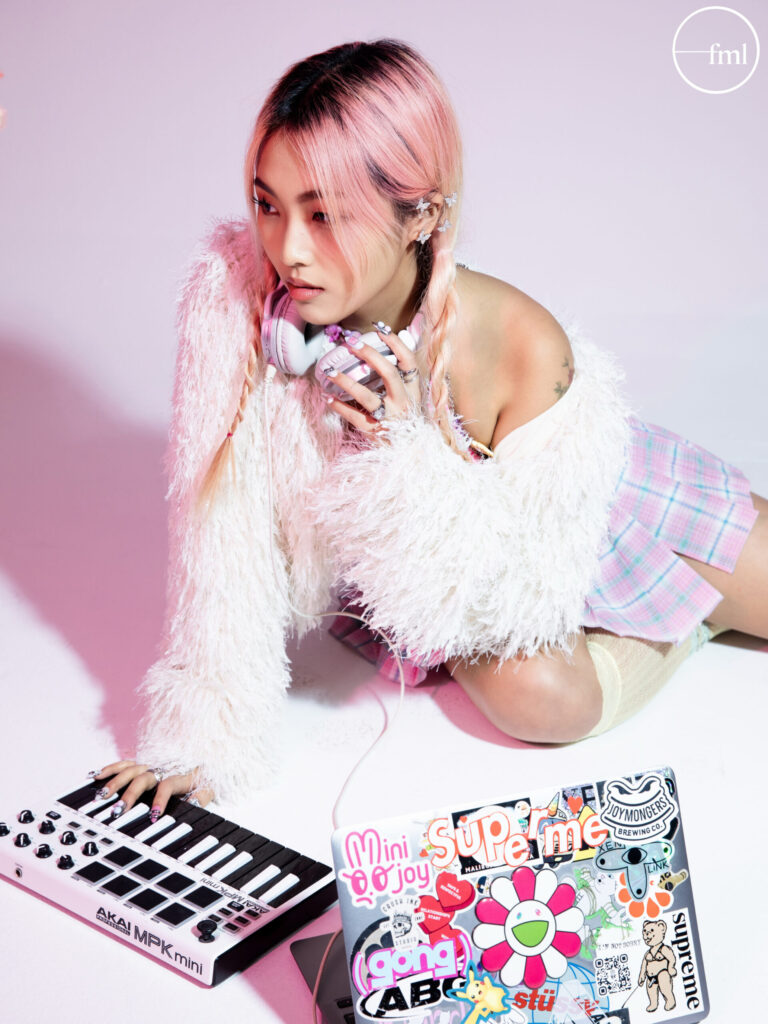
Minijoy’s #FMLFaves
Favorite Song: something about us by Daft punk
Favorite Movie: Inception, About time, Past lives
Favorite Dish: Cold Noodles(naengmyeon)
What’s in your bag?: USB w/ a carrot sticker on with 3 bunny key chains, mint, lip oil, The
national annual pass expires by sep
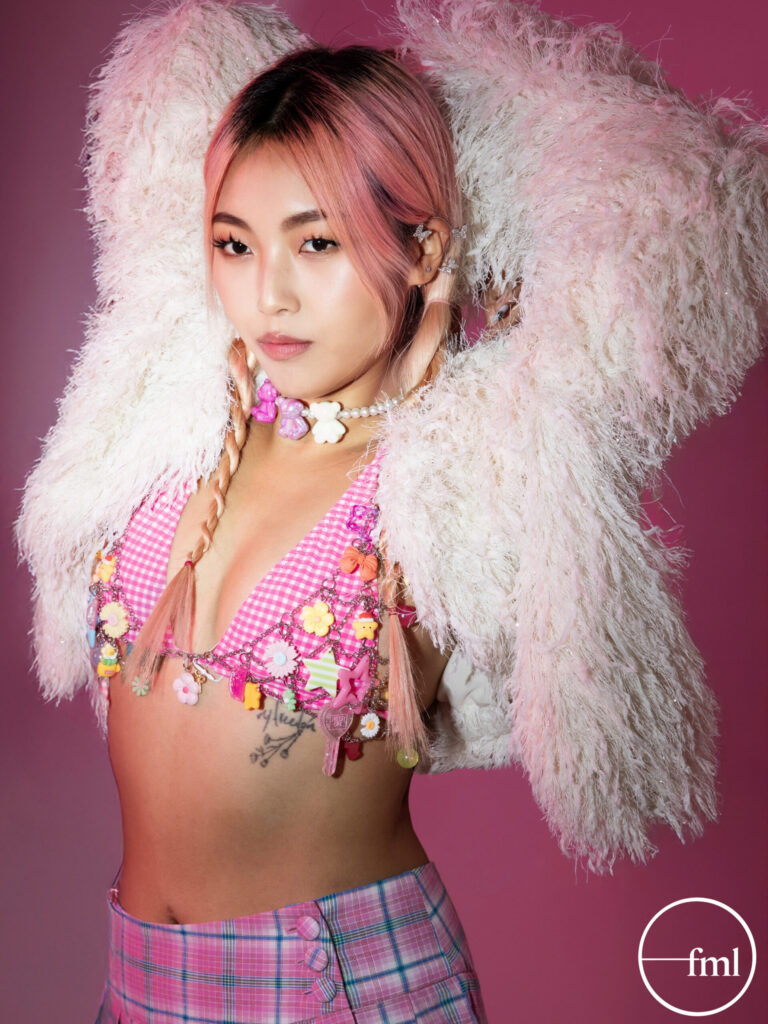
EIC: Gina Kim-Park ( @ginakpark )
Photography: Reinhardt Kenneth ( @reinhardtkenneth )
Fashion Stylist: Johnny Duarte ( @jhnyduarte )
MUA: Jane Everwell ( @janeeverwell.official )
Manicure: Liv ( @lieincolor , @sukiworld.shop )
Lighting Director: Ralphy Valle ( @ralphyvalley )
Digitech: Suimay Lee ( @suimaylee )
BTS: @klkikoa